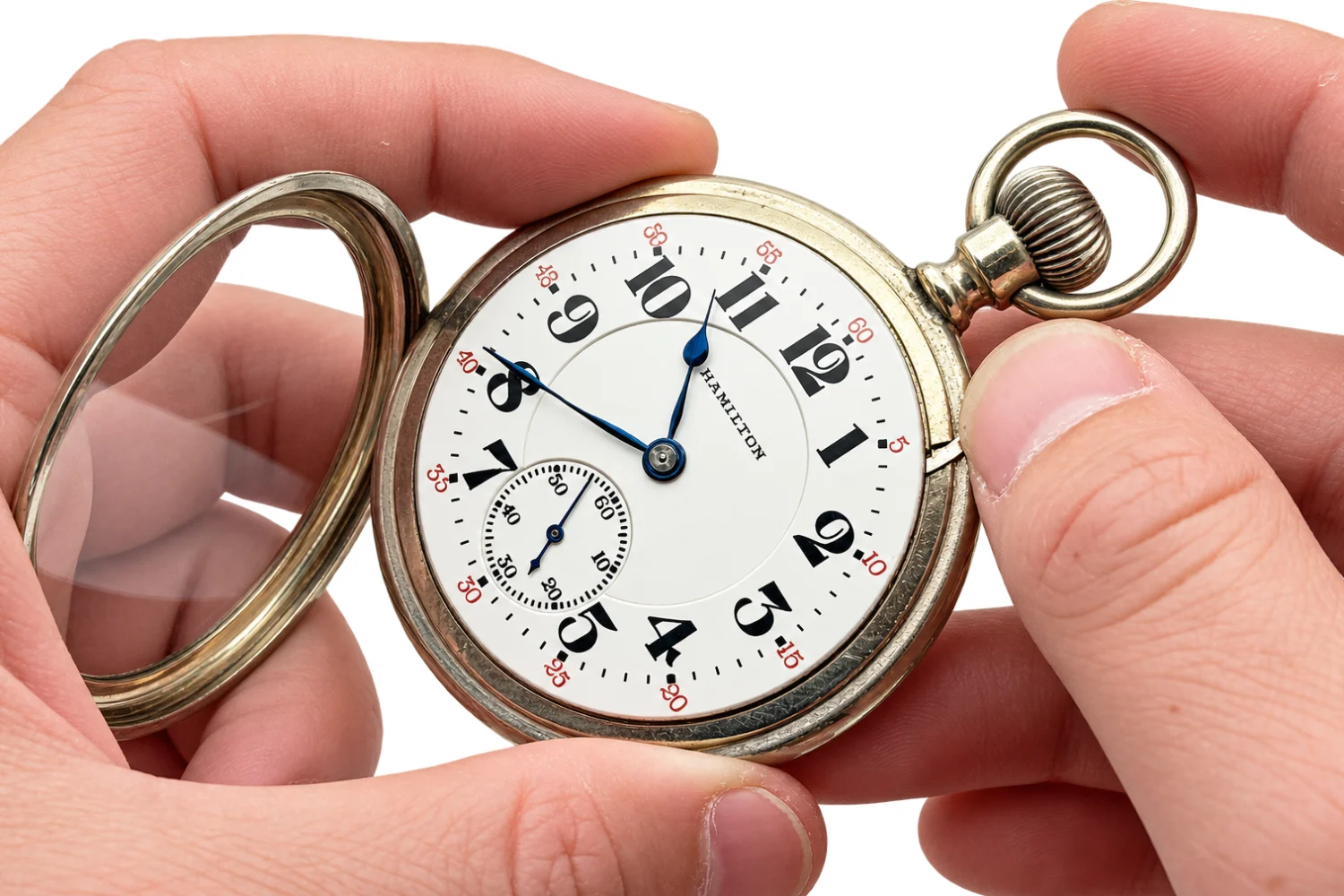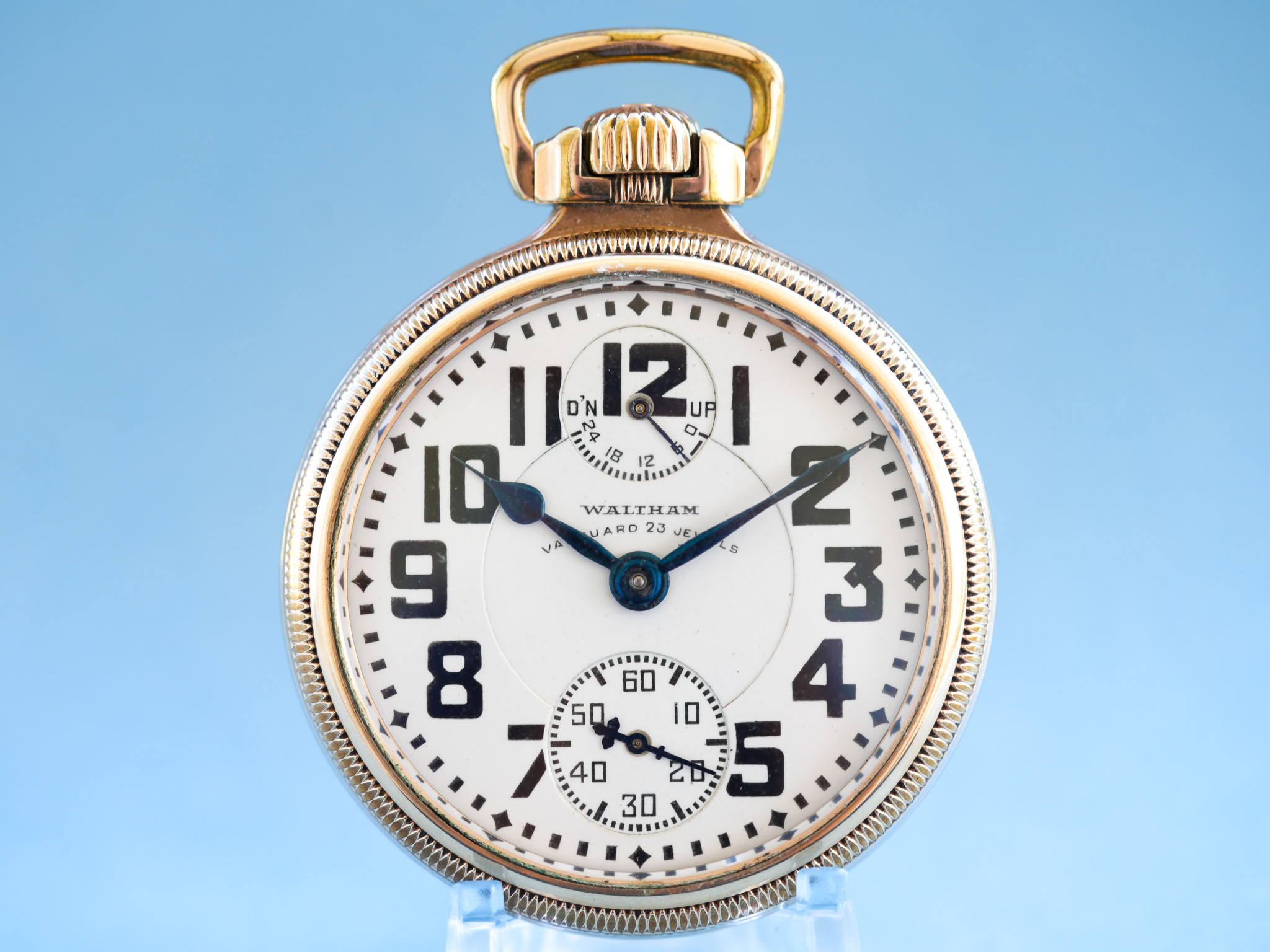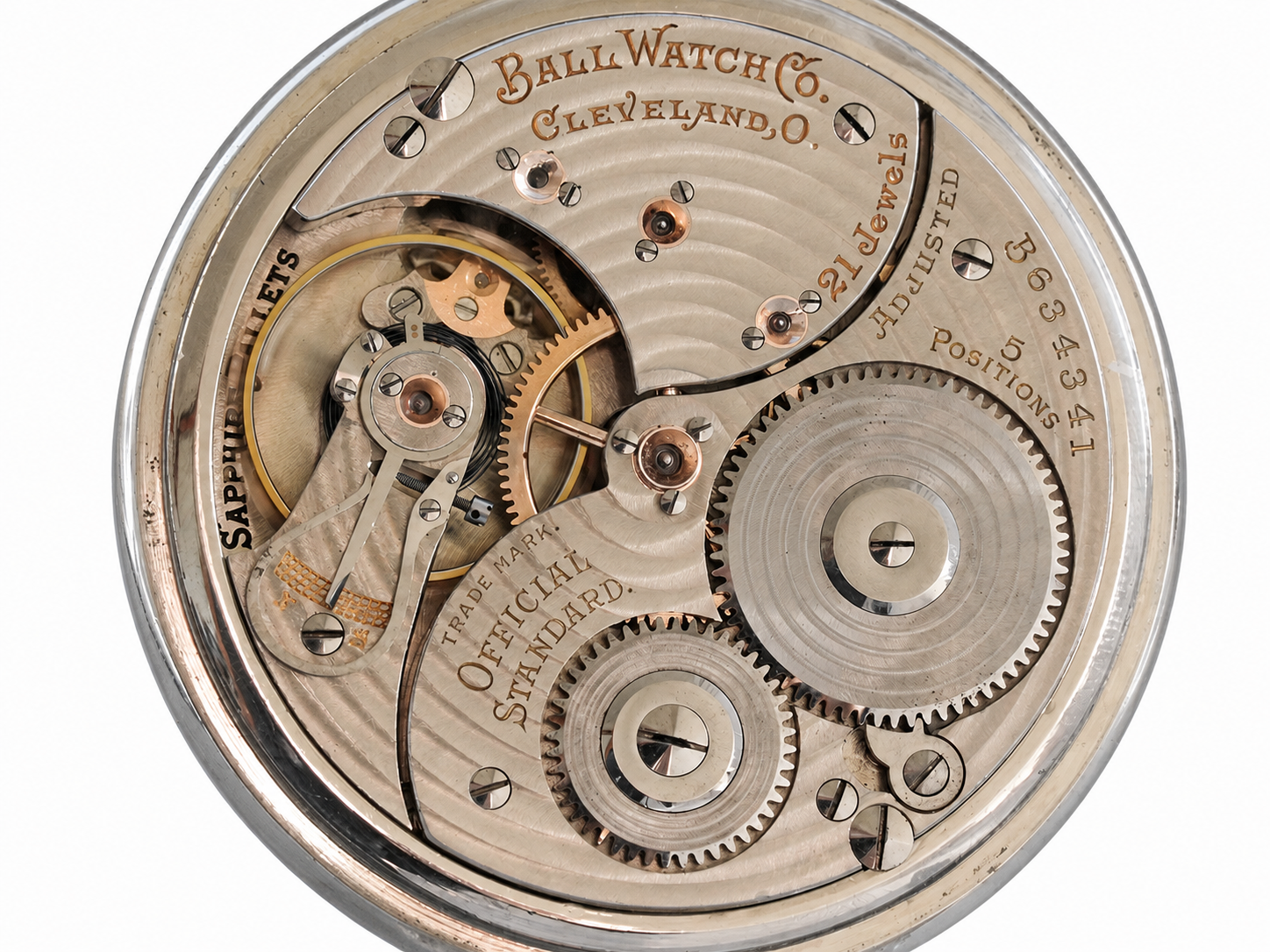
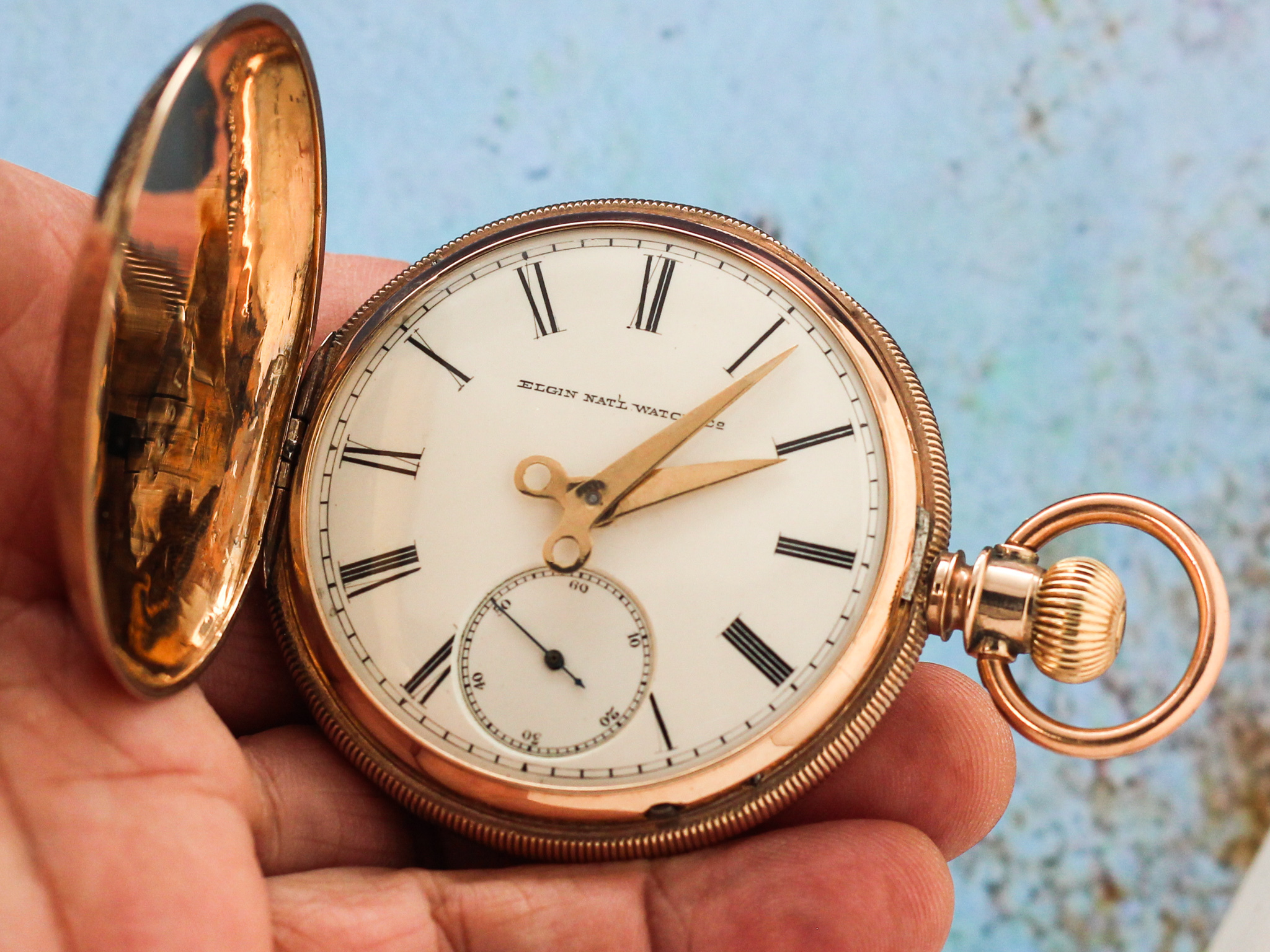
Here is a thought most people in the trades and in medicine have had at least once, usually after smacking a wristwatch against a junction box or scrubbing it down at the sink for the tenth time that shift: this thing does not belong on my wrist. They are right. The smart move, the one their grandfathers already figured out, is to put the watch in the pocket and leave the wrist alone.
A wristwatch on a working professional is a compromise. It is a conductor strapped to the body of an electrician, a snag-point on a plumber reaching into a vanity cabinet, and on a clinician it is a bracelet that has to come off at every sink. The pocket watch solves all three problems in one move. It rides in the coin pocket of your work pants or the watch pocket of a vest, it comes out only when you choose to read it, and it goes back in clean.
Below are five professionally serviced American railroad-grade pocket watches that I would happily hand to a journeyman electrician, a master plumber, an ER doc, or a surgeon. Every one of them was built to a standard that has not been matched since.
How I picked these five
I looked for three things. First, railroad-grade movements that were certified for accuracy when they left the factory and still hold time after a proper service. Second, anti-magnetic or magnetism-resistant hairsprings where the era allowed it, because in 1931 Hamilton introduced the Elinvar hairspring specifically because the railroads were phasing out steam locomotives in favor of electric locomotives, and the strong electromagnetic fields produced by the new generators created a serious safety concern for timepieces. That same concern is sitting in every motor control center and MRI suite today. Third, robust cases that survive a workday in a pocket.
All five are in the case right now, cleaned, oiled, adjusted, and guaranteed for one year.
1. Hamilton Grade 992E with Elinvar Hairspring (1940) — The Electrician's Choice
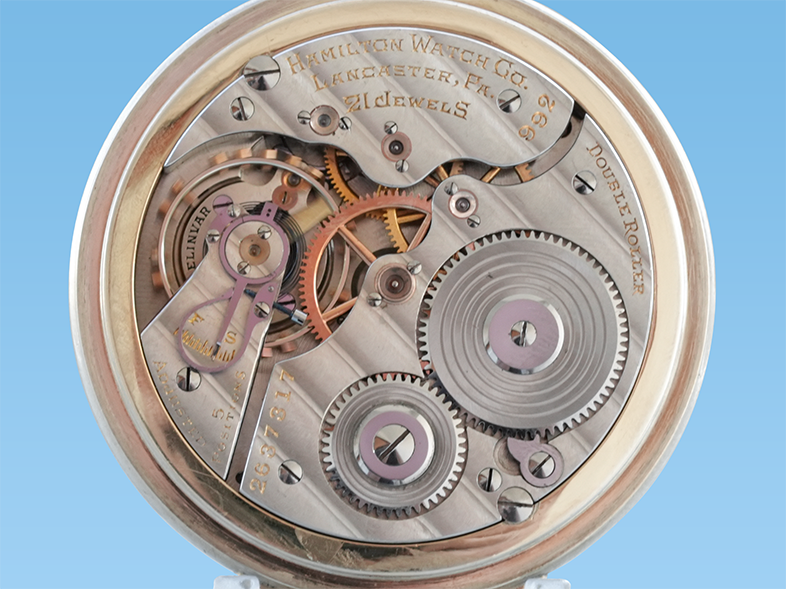
If you spend your day inside a panel or near big motors, this is the one. The 992E is the direct ancestor of the famous 992B that most people associate with railroad service. The story is the same on both. Hamilton first introduced the Elinvar hairspring and monometallic balance wheel in the 992E in September 1931. The improved version, Elinvar Extra, arrived in 1940 with the 992B and quickly became the industry standard. The new monometallic balance and the Elinvar Extra hairspring quickly made the 992B the universal standard for the railroad watch industry.
The historical anchor matters here. This 992E left Lancaster, Pennsylvania, in 1940, the same year Franklin Roosevelt was elected to a third term and the year Hamilton was already shifting wholesale into wartime production. A magnetized hairspring is the classic problem with a mechanical watch: the coils stick together, effectively becoming shorter, which causes the watch to oscillate faster and run fast. Elinvar dramatically reduces that effect. For anyone working around contactors, transformers, or VFDs, that is the difference between a watch that drifts every shift and a watch that keeps doing its job.
The movement itself is a small museum. 21 jewels in raised gold settings, a micrometer regulator, gold center wheel, double roller, adjusted to five positions and to temperature and isochronism. Look at the damascening under good light. That hand-finished plate pattern is something almost no modern factory bothers with anymore. $2,295.
2. Illinois Bunn Special Type III 60-Hour (1926) — The 60-Hour Engine
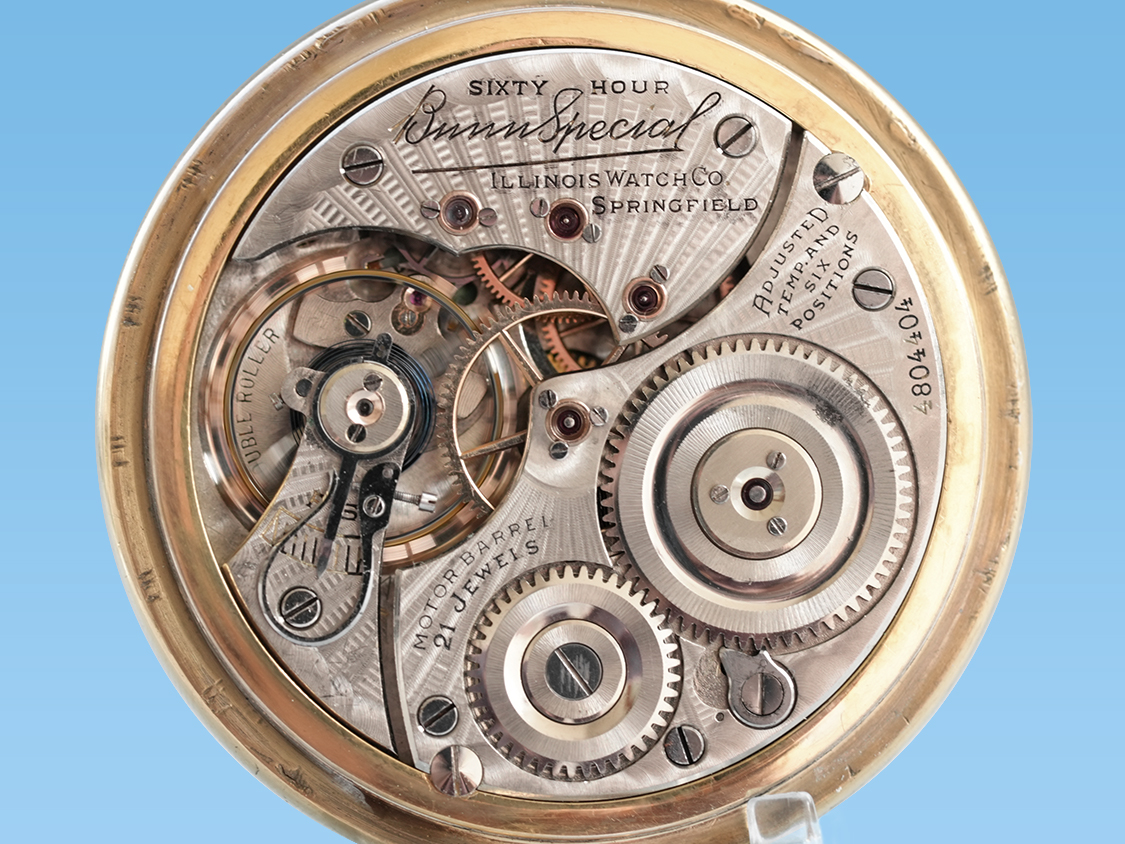
For the working professional who forgets to wind on the weekend, the 60-hour Bunn Special is the answer. Standard pocket watches of the era ran roughly 36 to 42 hours on a full wind. The Illinois 60-hour mainspring was a major innovation when most pocket watches were limited to 42 hours of continuous run time between winds. Wind it Friday night, it is still keeping railroad time Sunday morning.
The reason Illinois pulled this off was not magic. It was the barrel and the mainspring design: the spring was longer, wider, and the barrel was sized to fit it. Hamilton bought Illinois not long after this watch was made, and even with all the engineering muscle in Lancaster, Hamilton never reproduced the 60-hour feat after they acquired the business. That is how good Illinois was at this one thing.
This particular example left Springfield, Illinois, in 1926, the same year Henry Ford rolled out the five-day work week and the Route 66 designation was approved. The sunburst damaskeening on the 161-family plates is exactly the kind of finishing that, if produced today, would put the watch in the same conversation as a hand-finished Swiss high complication. $2,475.
3. Elgin B.W. Raymond Grade 571 (1953) — The Workhorse
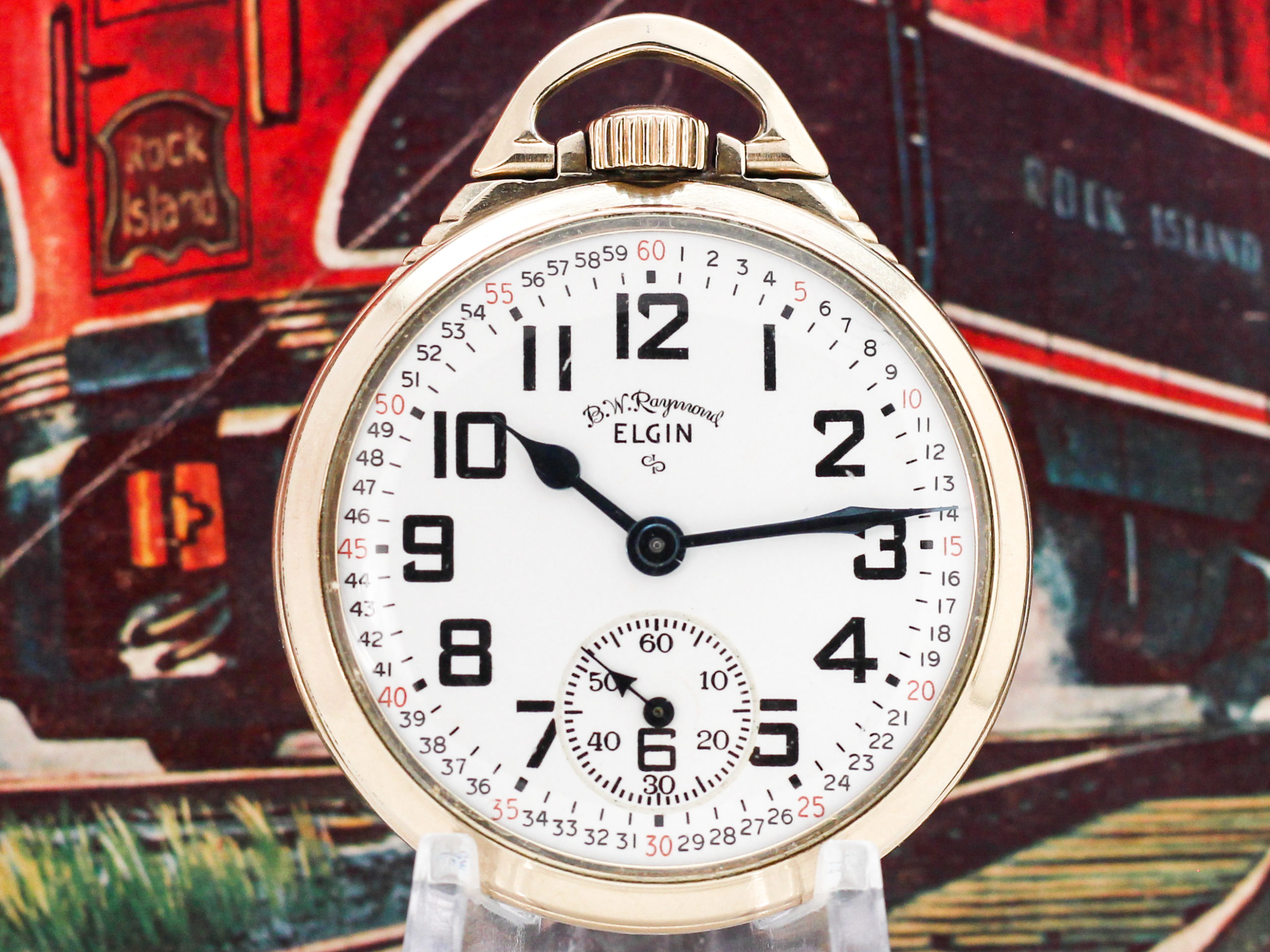
The Elgin B.W. Raymond is the watch a railroad conductor actually carried to work, not the one he kept in a velvet box. The grade is named for Benjamin Wright Raymond, an early president of Elgin and a former mayor of Chicago, and the name carried across nearly a century of railroad service. This 1953 Grade 571 sits at the late end of that lineage, with 21 jewels, adjusted to temperature and positions, and a rugged Streamline case built for daily carry.
By 1940, Elgin had developed its own answer to the magnetism problem: the Elginium Y hairspring and Invar balance were offered in the top-of-the-line 23-jewel B.W. Raymond, and the 21-jewel Grade 590 with a Beryl-X balance and Elginium hairspring followed in 1941. Grade 571 inherits that engineering line. For a plumber, electrician, or HVAC tech who needs a watch that just does not quit, this is the one I would point to first.
1953 is also the year the Korean War armistice was signed and the year DNA's structure was published in Nature. Real history, in your hand, still running. $1,750.
4. Hamilton Grade 950 in Model #2 Bar Over Crown Case (1935) — The Surgeon's Watch
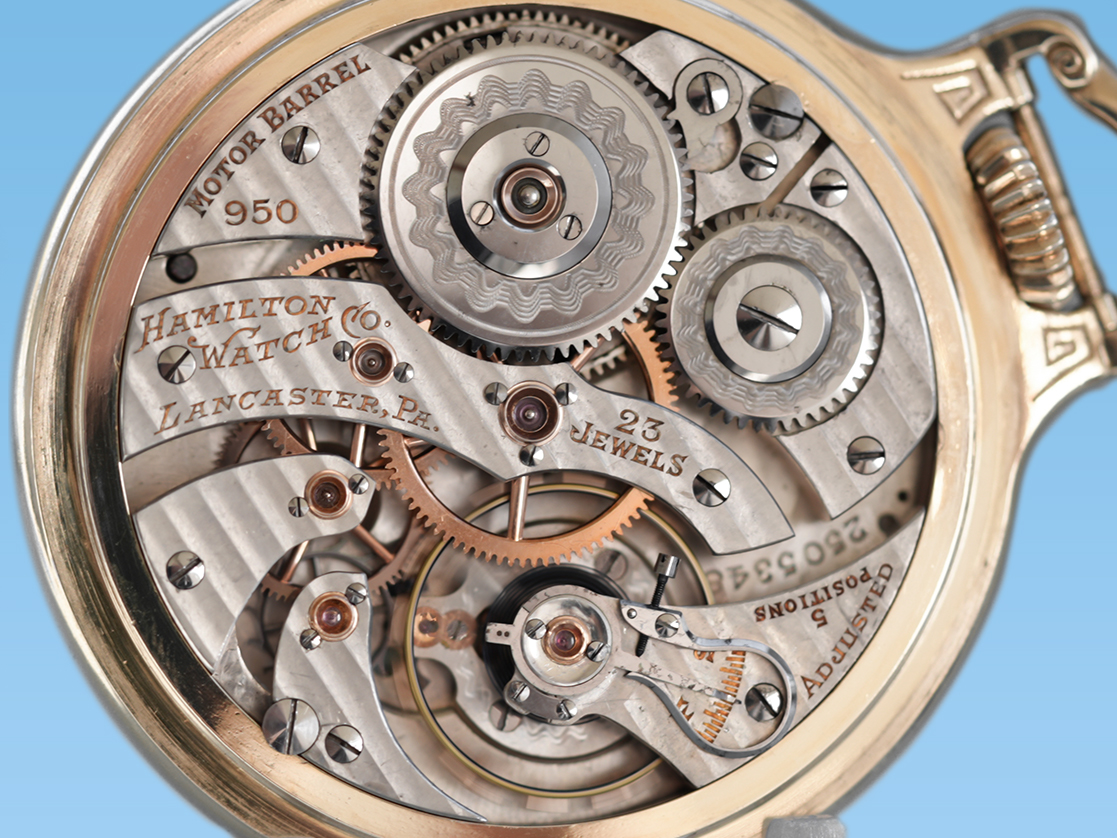
This is the one for the doctor or the dentist. The reason is simple and unglamorous: the UK's Bare Below the Elbows policy, defined by NICE, prohibits wearing a wristwatch or stoned rings, requires short sleeves or the ability to roll them up, and was implemented across the NHS in September 2007 with enforcement beginning in January 2008. American hospitals do not have a single federal rule, but most infection-control programs have adopted similar guidance. Wristwatches can be considered a vector for healthcare-acquired infection, though most of the supporting data are confounded by other risk factors. A pocket watch sidesteps the debate entirely. It is not on the wrist, it does not get washed, and it stays in a leather slip in your pocket where it is not touching a single patient.
The 950 is Hamilton's top-shelf 23-jewel railroad grade, a step above even the 992 in finish. Gold jewel settings, gold center wheel, micrometric regulator, adjusted to five positions. The movement is the kind of object that makes a watchmaker quiet for a minute when the back comes off. This example was finished in 1935, the year Franklin Roosevelt signed the Social Security Act and Babe Ruth played his final season. $3,250.
5. Ball Hamilton Official Standard 999B (1947) — The Postwar Standard
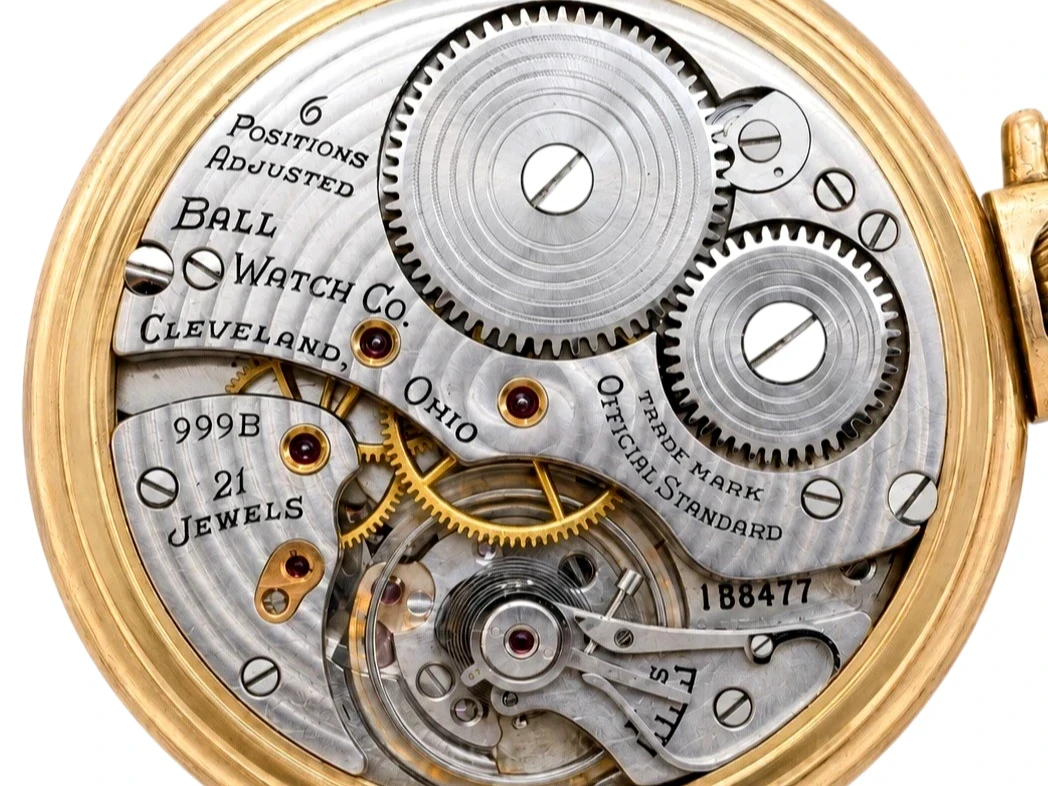
Something folks often miss about Ball is that the Ball Watch Company didn't actually manufacture pocket watches in the way Hamilton or Elgin did. Webb C. Ball set the standards and the inspection regime, and the watches themselves were built by the best American makers to his specifications. The result is a watch with Hamilton's engineering and Ball's quality control stamped onto a single movement. This 999B was produced in 1947, the year Chuck Yeager broke the sound barrier and the year the transistor was invented at Bell Labs.
For the tradesman who wants a postwar railroad watch with the magnetism-resistant Elinvar Extra hairspring already inside, this is the move. 21 jewels, adjusted to five positions, in a robust case meant to live in a working man's pocket. $3,275.
The pocket-watch carry, in plain terms
The carry itself is simple. The small coin pocket sewn into the right front of most work pants and jeans is, historically, the pocket watch pocket. That is what it was designed for. Drop the watch into a soft leather slip or pouch first, run the chain or fob through a belt loop, and the watch rides flat against your thigh, protected from keys and tools. It does not bang on conduit. It does not get caught on a P-trap. It does not need to come off to scrub in.
There is also something to the ritual. Pulling the watch out, reading the time, and putting it back is a small moment of intentionality in a fast-paced day. A glance at a wristwatch is reflexive. Reaching for a pocket watch is a decision. For anyone in a precision trade or in medicine, that second of deliberateness has a way of settling the rest of the work down with it.
Every one of these has been serviced
Before any pocket watch leaves my shop, the movement is cleaned, oiled, adjusted, and timed. Every watch listed above is running to railroad accuracy now, and is guaranteed for one year from the date of purchase. If you already own a pocket watch that needs the same treatment, you can send it in for service through the repair page. I work on American pocket watches all day, every day, and I would rather see a good watch back on duty than sitting silent in a drawer.
If you are ready to retire the wristwatch and put a real precision instrument back in your pocket, browse the rest of the railroad-grade collection or call me directly at (310) 486-0572. I am happy to talk through which one fits the work you actually do.
And if you have an old family pocket watch you are thinking about selling, I am always buying. The "We Buy Watches" page is here.
A few questions I get asked
Is a pocket watch really practical for daily work in 2026?
Yes, and it has been practical without interruption for over 150 years. The pocket watch was the precision instrument of the railroads, the surveyors, the doctors, and the engineers who built the country. It has not stopped being useful. The only thing that changed was fashion.
Will my 1940s Hamilton survive a workday in a tool belt?
If it is in a proper leather pouch and lives in the coin pocket rather than rattling around a tool bag, yes. These watches were built for working men. The cases on the railroad grades are thick, the crystals are replaceable, and the movements were designed to take the bumps of a locomotive cab. A clinic or a job site is gentler than a steam engine.
What is the anti-magnetic hairspring and why should an electrician care?
The hairspring is the tiny coiled spring at the heart of every mechanical watch. If it gets magnetized, the coils stick together, the watch races, and accuracy goes out the window. Elinvar and Elinvar Extra, the alloys Hamilton introduced in the 1930s and 1940s, are nickel-iron-chromium alloys that are nearly nonmagnetic. Elinvar consists of 59% iron, 36% nickel, and 5% chromium and is almost nonmagnetic and corrosion resistant. For a working electrician, that is the difference between a watch that holds time around big motors and one that does not.
How accurate are these watches today?
A properly serviced railroad-grade American pocket watch will hold within a few seconds a day, which is well inside the original railroad standard of plus or minus 30 seconds a week. That is more than enough for anyone whose work depends on the time.
What does it cost to service a pocket watch?
It varies with the movement and the condition. Send a note through the repair page with photos of the movement and the case, and I will give you an honest quote before any work starts.