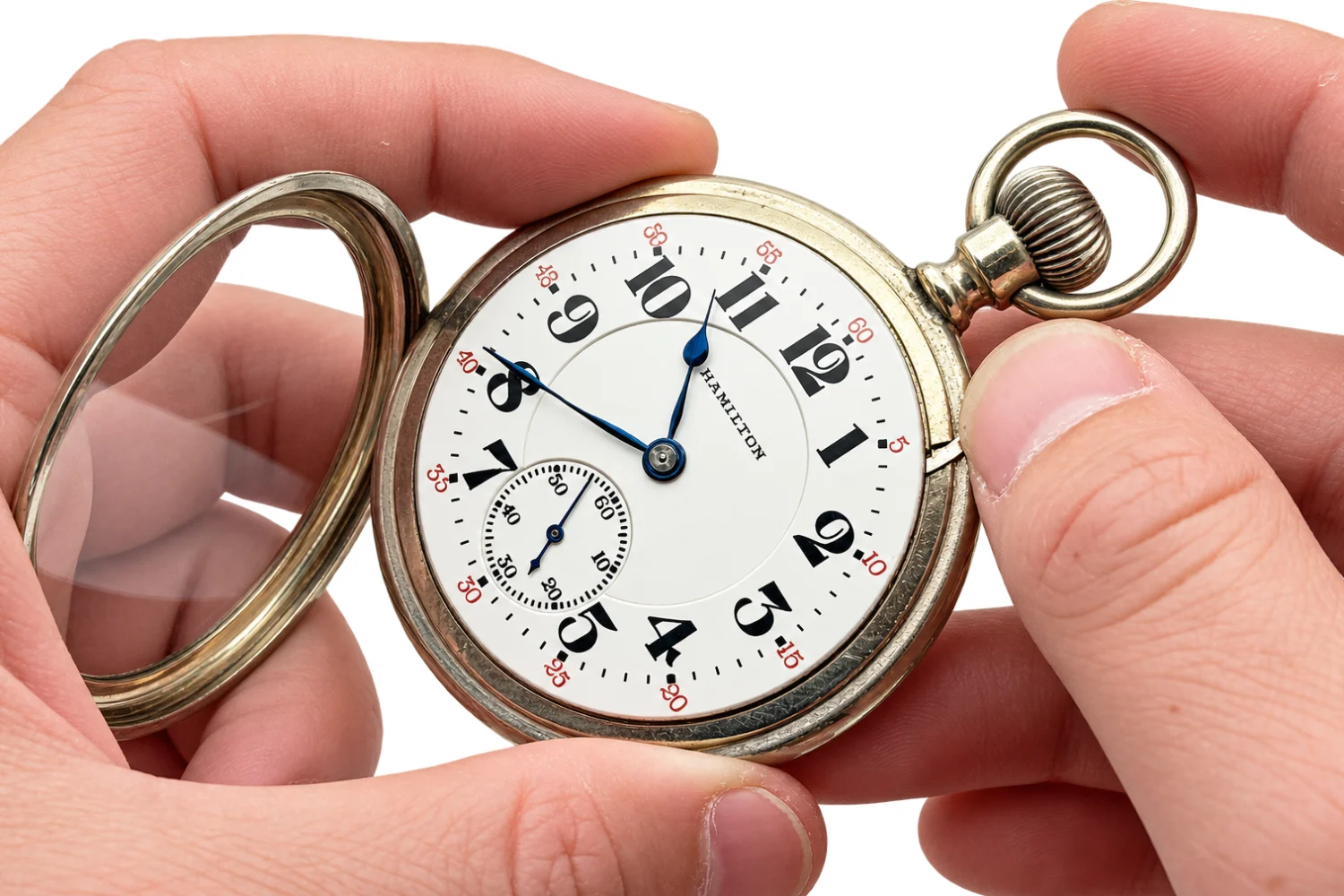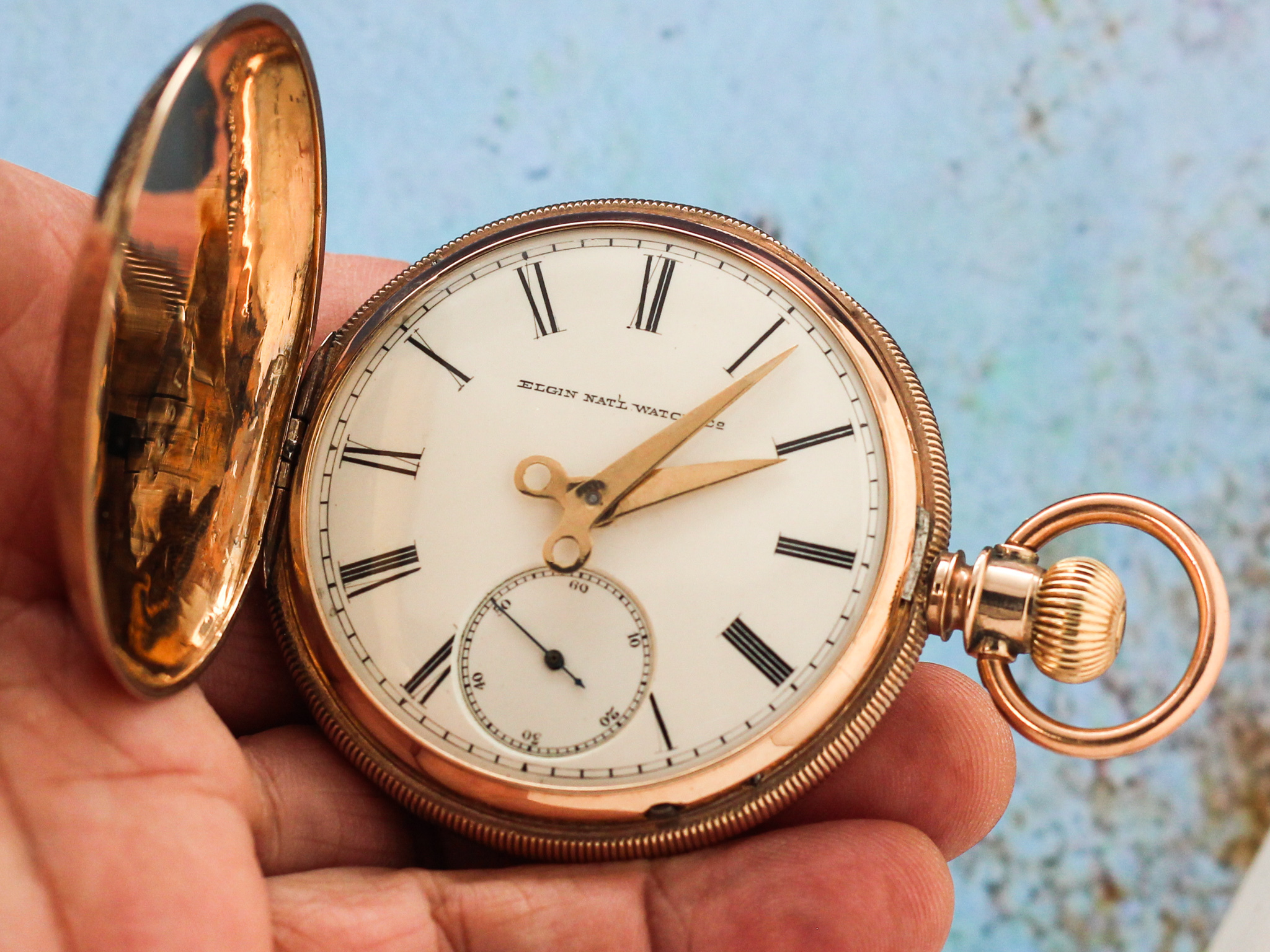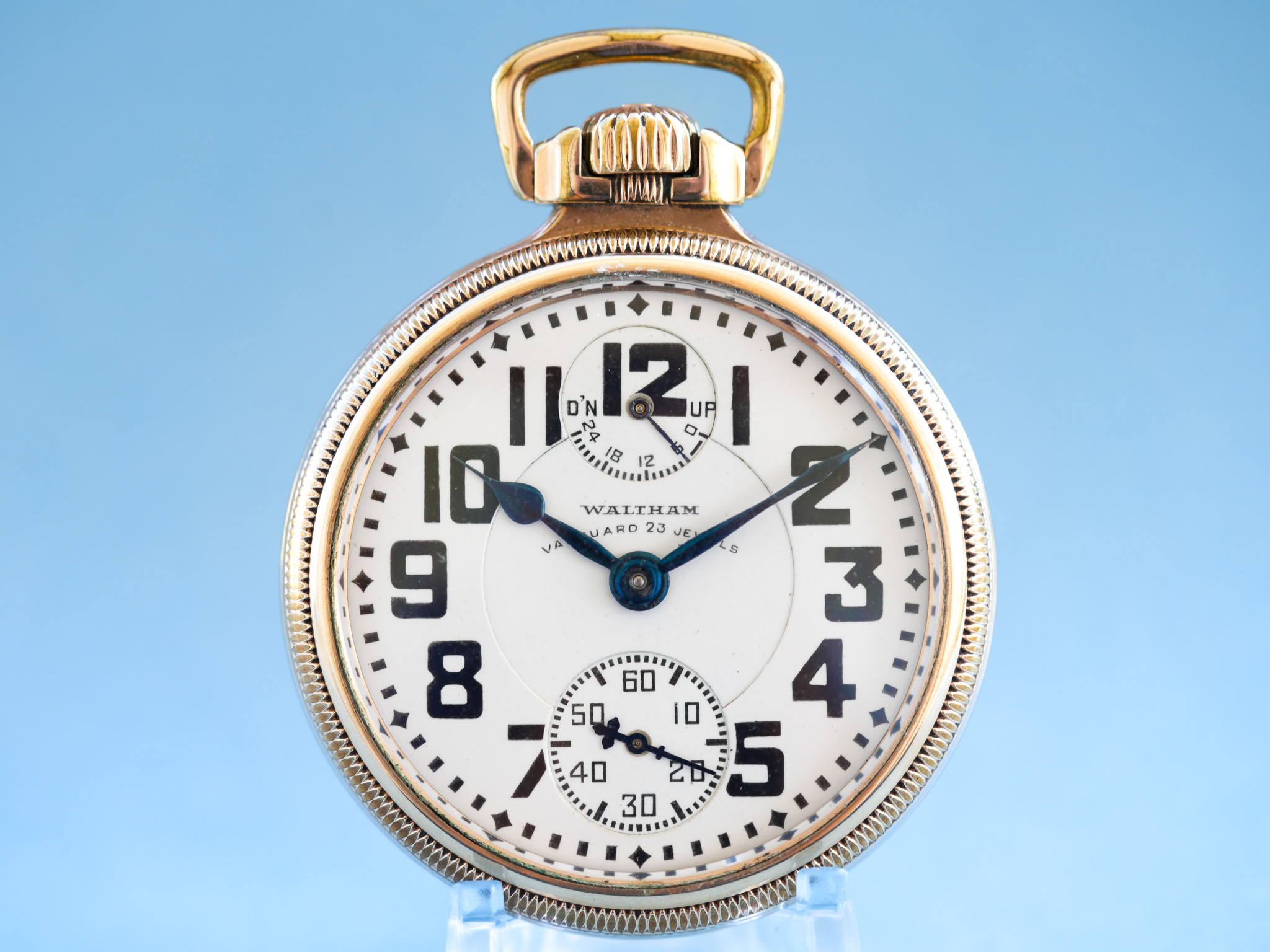
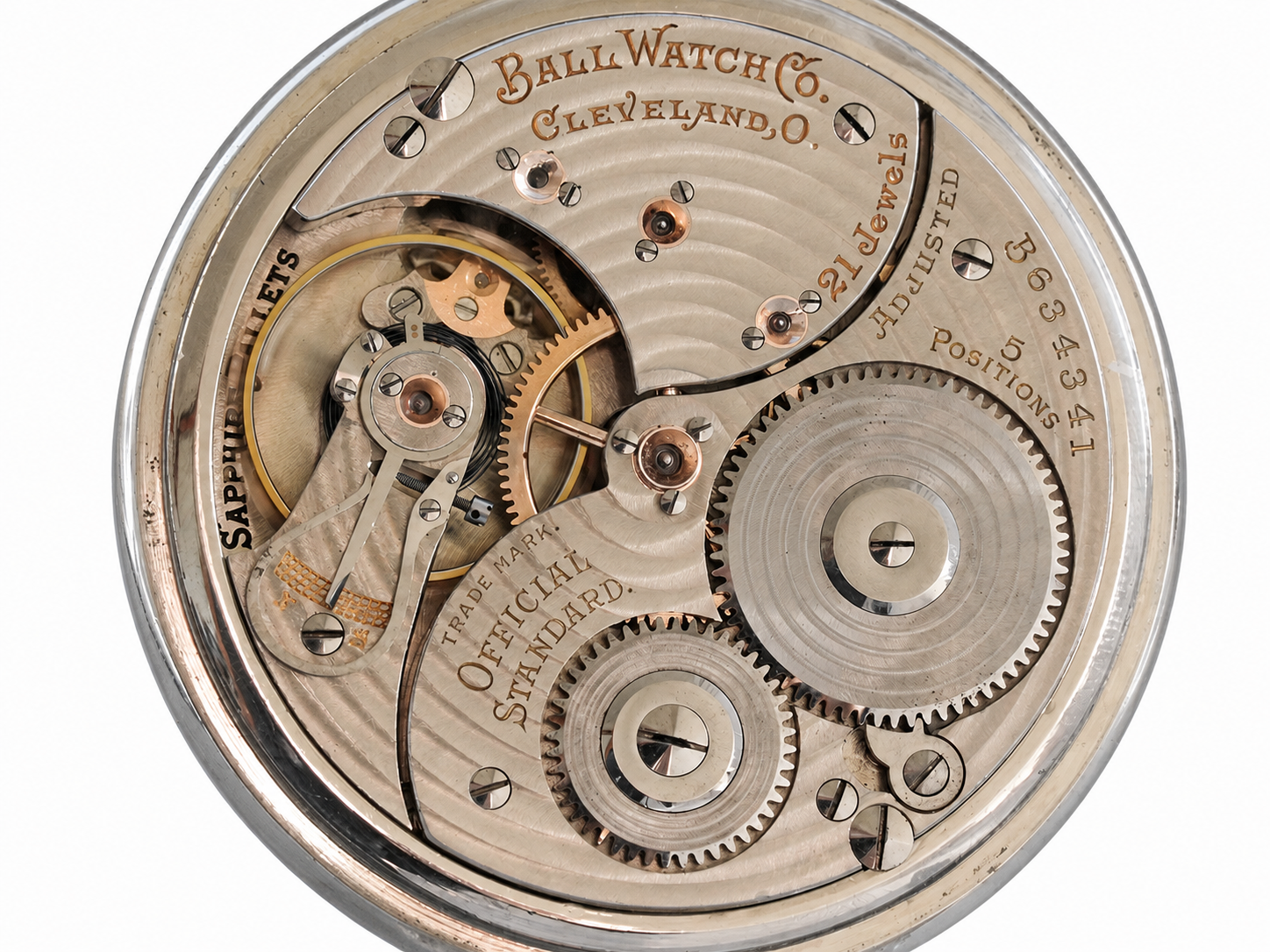
It's easy to overlook, but the words "Official Railroad Standard" on a Ball dial are not a marketing flourish. They are the residue of a real catastrophe, a real investigation, and a quiet revolution in how Americans kept time. The story begins on April 18, 1891, with a head-on collision near Kipton, Ohio, between a fast mail train heading east and a passenger train running west. Eight people died. A pocket watch that had stopped for four minutes and then started again was at the center of the inquiry. The man called in to investigate, a Cleveland jeweler named Webb C. Ball, walked out of that wreckage and ended up writing the rulebook for railroad timekeeping in North America.
Many years and many watches later, the Ball name still carries that weight. This guide is for the collector who wants to understand the Ball railroad pocket watch: where it came from, why the grades matter, how to read the dial and the movement, and what a serious example looks like when one lands on my bench.
Webb C. Ball and the Birth of the Official Railroad Standard
Before Kipton, American railroads ran on a patchwork of local times and inconsistent watches. Standard time had been adopted by the railroads in 1883, but plenty of trains kept running on whatever clock the station agent trusted. Ball's investigation made plain what the industry had been quietly tolerating: timekeeping practices varied wildly from line to line, and that variation was costing lives.
Ball was appointed Chief Time Inspector and got to work. He built an inspection network around the railroads, and by 1908 he was overseeing roughly 180 railroads and more than a million railroad watches. Under his system, conductors, engineers, firemen, and rear brakemen each carried a Ball-certified watch, and every two weeks those watches were compared against Standard Time from the Naval Observatory in Washington. A variation of more than 30 seconds meant the watch had to be readjusted or swapped for another equal in grade. That is the foundation on which "Official Railroad Standard" was built. It was a discipline, not a slogan.
The other thing to understand: the Ball Watch Company did not actually make watch movements. Ball partnered with the great American factories (Hamilton chiefly, along with Hampden, Waltham, Elgin, and Illinois) and had them produce movements to his specifications, then signed and finished and cased to his standards. The result is one of the most interesting hybrids in American horology: a Hamilton movement, built better than Hamilton's own catalog grades, wearing Ball's name across the bridge.
Reading the Grades: 999, 999B, 999N, 999P, and the Rest
Almost every Ball collector eventually arrives at the same question: what do those letters after the 999 actually mean? Here is the short, useful version.
The base Grade 999, established in the years after Ball's standards took hold, set the template: 16 size, open face, lever set, adjusted to temperature and five positions, marked "Official RR Standard" on the movement and dial. The suffix letters mark the variations and refinements that followed across decades of production.
- 999A: An early 18-size, 21-jewel Hamilton-made Ball, lever set, open face, with the original single-sunk porcelain dial. A turn-of-the-century survivor when found intact.
- 999B: The late-period 21-jewel ¾-plate workhorse in nickel with circular damascening, adjusted to six positions. Essentially the Ball-signed cousin of the Hamilton 992B, produced in twelve runs from 1943 to 1954.
- 999N: The 23-jewel ¾-plate version with a motor barrel, gold seal insert, and Ball's own 1908-patent hairspring stud. Made through the 1910s and 1920s.
- 999P: The 21-jewel ¾-plate going-barrel grade with the Hamilton hairspring stud, fully capped lever escapement and Elinvar hairspring on later examples, 16 size and adjusted to five positions.
- 999H, 999K, 999R, and the brotherhood grades (999C, 999D): The deeper end of the catalog. The brotherhood-marked watches were made specifically for the Brotherhood of Railroad Trainmen and the Brotherhood of Locomotive Firemen, each with their own damascening pattern.
If you are starting a Ball collection, the 999B and the 999P are the two grades you are most likely to encounter in clean, serviceable condition. The 999N is the one collectors quietly hunt: 23 jewels, earlier production, harder to find with an unmolested dial.
A 1929 Ball Hamilton 999P in a White Gold Fill Stirrup Bow Case
I have one of these in the case right now. This is a 1929 Ball Hamilton Grade 999P housed in the popular white gold fill stirrup bow case, 16 size, 21 jewels, adjusted to five positions and to temperature, lever set, in a Ball-patented case design you cannot mistake for anything else.
1929 is a year that needs no introduction. This watch left the shop the same year Herbert Hoover was inaugurated in March and the Dow Jones Industrial Average climbed to its September peak of 381 points, before the four ruinous days of late October that historians call the Great Crash. Whoever first carried this watch on his vest chain was almost certainly a working railroad man, well paid and senior enough to afford a Ball. His life was about to get a great deal harder. The watch kept running through all of it.
The movement is the thing. Look at the circular damascening on the nickel plates, the polished jewel settings, the clean black engraving across the bridge. The finishing on a movement like this is hand-applied work that is not done anywhere in volume today. If you tried to produce a 999P now, to the same standards, it would price out alongside watches with names that command the auction headlines.
A 1947 Ball Hamilton 999B Model 5
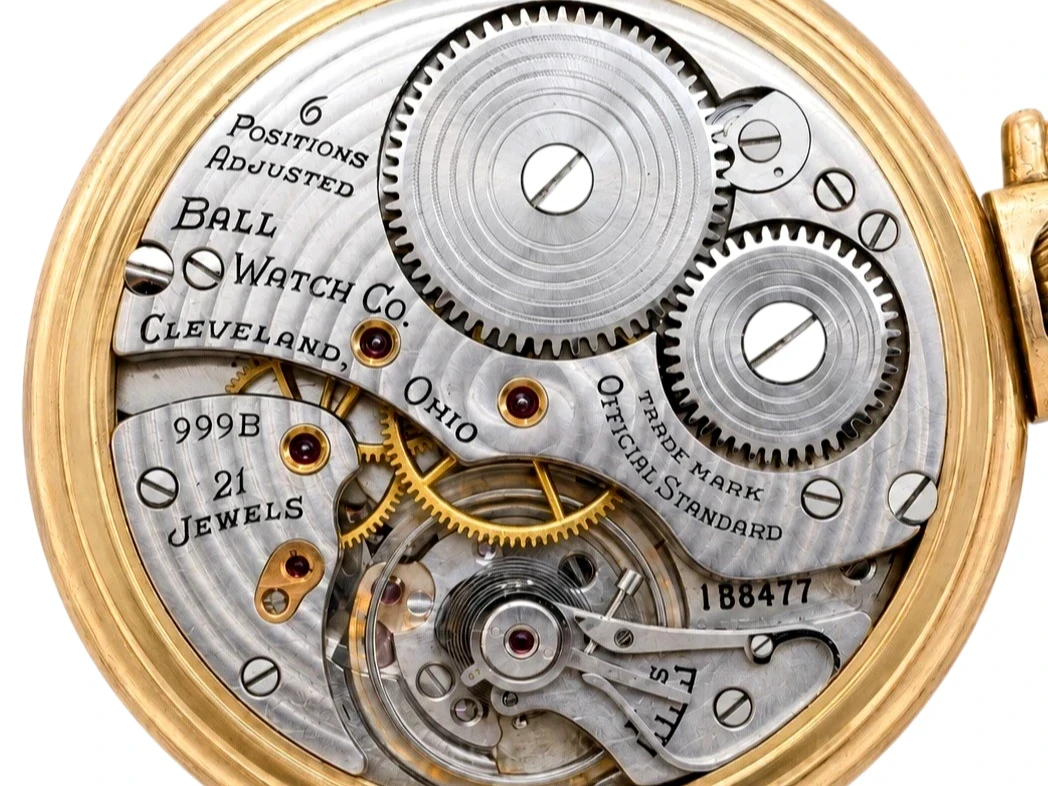
The 1947 Ball Hamilton 999B Model 5 sits at the other end of the railroad era. By the time this watch was assembled, Jackie Robinson had just stepped onto Ebbets Field for the Brooklyn Dodgers, President Truman had stood before a joint session of Congress to announce the doctrine that now bears his name, and the Cold War was being named in real time. The American railroad was still the spine of the country, but the diesel locomotive had begun pushing steam aside, and the wristwatch was quietly replacing the pocket watch on most American wrists.
The 999B itself is exceptional. Across its production runs from 1943 to 1954, the total output was modest by factory standards. It is, in effect, the Ball-signed equivalent of the Hamilton 992B, with the same 21 jewels, the same six-position adjustment, the same matte "Official RR Standard" dial with bold Arabic numerals and the spade-and-whip hands. For many collectors this is the holy grail of mid-century American railroad watches.
If you are looking for a Ball that you can actually carry, this is the grade I would point you toward. Serviced and adjusted properly, a 999B will keep time to a few seconds a day. It is built for generations.
Cases, Dials, and the Details That Separate a Good Ball From a Great One
The Ball-signed case is its own subject. Ball patented several case designs, and the two you see most often are the Stirrup Bow case and the Ball Model case, usually in 14k or 10k gold fill, occasionally in solid gold, with the "Ball Official Standard" mark inside the back. White gold fill was a Ball signature in the 1920s and into the mid-1930s, after which the company largely moved on from it.
The dial is the next place to look. A correct Ball railroad dial is single-sunk, enameled, with crisp Arabic numerals, a subsidiary seconds register at six o'clock, and the words "Official RR Standard" or "Official Standard" printed in black. Spade-and-whip hands are the standard fit for the later 999B and 999P examples. Hairlines in the enamel are common after a century, but a clean dial with no chips and no repaint adds real value. Repainted dials are everywhere on the open market. If the lettering looks slightly off, the numerals fat, or the printing too uniform, ask for very clear photographs of the dial under raking light.
Then the movement. Pull the back if you can, or ask the seller to send a clear movement photo. You want to see the Ball signature across the bridge, the correct grade number, and the damascening pattern intact. Circular damascening for most of the 999 line, and special patterns for the brotherhood grades. Gold jewel settings, where present, should be bright. The screws should be unmolested, not buggered up by a previous repair attempt.
Servicing a Ball: What It Actually Takes
A Ball railroad watch was designed to be serviced. That is part of what made the Official Railroad Standard program work in the first place. Every two weeks these watches went in front of an inspector, and every few years they came apart on a watchmaker's bench for a full clean and oil.
That same discipline applies today, with the wrinkle that good American pocket watch repair has become a smaller world. Mainsprings fatigue. Old oils gum up and turn into varnish. Pivots wear, hairsprings get bent by clumsy hands, and motor barrels need to come apart correctly to be put back together correctly. If you own a Ball and it has not seen a watchmaker in the last decade, it is overdue.
If you have a Ball that needs work, or you have inherited one and you are not sure where to start, get in touch through the watch repairs page or call the shop at (310) 486-0572. Every watch that goes out of my shop is cleaned, oiled, adjusted, tested, and guaranteed for one year from the date of purchase.
Why Ball Railroad Watches Still Matter
The romance of these watches is not nostalgia for its own sake. Ball railroad pocket watches sit at the exact point where American industry, American invention, and American distance collided. The transcontinental railway had been driven through in 1869. Standard time followed in 1883. Ball's inspection system followed in the 1890s, and for the next half-century, the country moved on rails coordinated by these watches in the pockets of conductors and engineers from Chicago to San Francisco. They were the precision instruments that made modern logistics possible.
They are also small objects of astonishing beauty. To open the back of a 999N and watch the balance swing, to see the damascening catch the light, to hear the tick of a 21-jewel movement that has been running since before your grandfather was born, is to encounter craftsmanship that the modern world does not produce in volume. These are the computers of their era, mechanical calculators built to count time to the second, by hand, in finishing that would never be matched again.
Selling or Inherited a Ball Pocket Watch?
I buy Ball railroad watches in honest condition, especially the 999B, 999N, 999P, and the harder-to-find brotherhood grades. If you have one sitting in a drawer or a safe deposit box and you are wondering what it is, the we buy watches page is the best place to start. Send photos of the dial, the movement, and the case back, and I will tell you honestly what I see.
Ball Railroad Pocket Watch FAQ
Did the Ball Watch Company make their own movements?
No. Ball contracted with American factories, mainly Hamilton, along with Hampden, Waltham, Elgin, and Illinois, to produce movements built to his specifications and signed with the Ball name. He kept tight control over design, materials, finishing, and inspection, which is why Ball-signed movements are often noticeably better than the same factory's catalog grades.
What does "Official Railroad Standard" actually mean on a Ball dial?
It means the watch was built and inspected to the railroad timekeeping standards Webb C. Ball developed after the 1891 Kipton wreck and refined through the 1890s and early 1900s. In practice, that meant 16 or 18 size, open face, lever set, a minimum of 17 functional jewels (the better grades carried 21 or 23), adjusted to temperature and to at least five positions, and capable of holding accuracy within roughly 30 seconds across the two-week inspection cycle.
Is a Ball 999B the same as a Hamilton 992B?
Mechanically they are very close. The 999B is a Ball-signed ¾-plate, 21-jewel, six-position-adjusted movement that corresponds to the Hamilton 992B. The Ball version carries the Ball signature, Ball-specified finishing details, and was sold through Ball's inspection network. Collectors generally treat the 999B as the more desirable of the two.
How much is a Ball railroad pocket watch worth?
Honest answer: it depends entirely on grade, condition, completeness, and whether the movement, dial, and case match. A clean, serviced 999B or 999P in a correct Ball case sits in the low to mid four figures. A 23-jewel 999N in an early Ball Stirrup Bow case, with an unmolested dial, can run higher. A brotherhood-marked watch with its original damascening intact is its own conversation.
Can a Ball pocket watch still keep accurate time today?
Yes, when it has been properly serviced. These movements were designed to a level of precision that is still impressive. A correctly cleaned, oiled, and adjusted Ball will hold time to a few seconds a day, sometimes better. The Ball railroad watches in my case are all serviced before they go out, tested in multiple positions, and guaranteed for a year.
If you would like to talk through a Ball you own, a Ball you are thinking of buying, or a Ball you would like me to keep an eye out for, get in touch through the contact page or call the shop at (310) 486-0572. I am happy to spend the time.