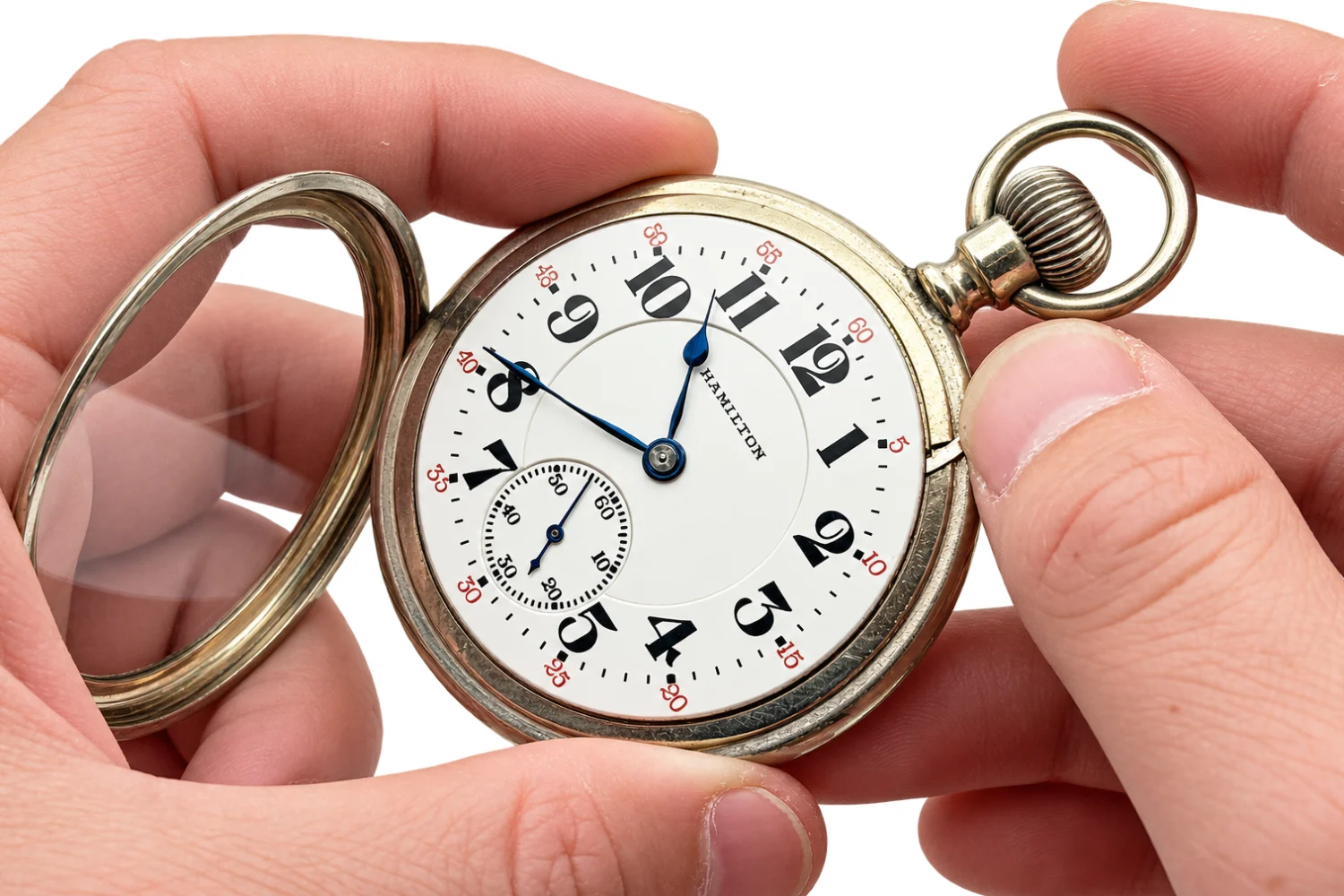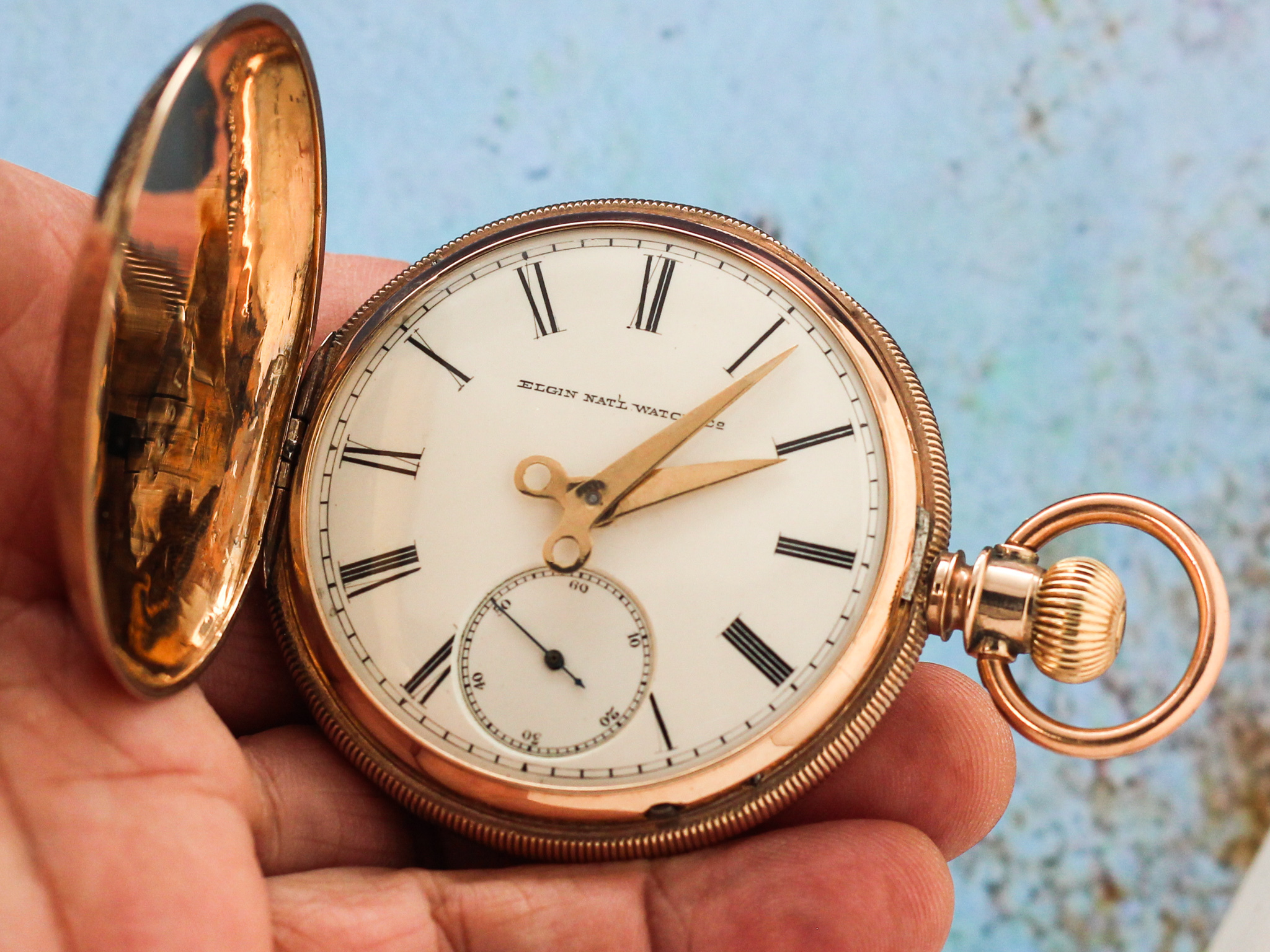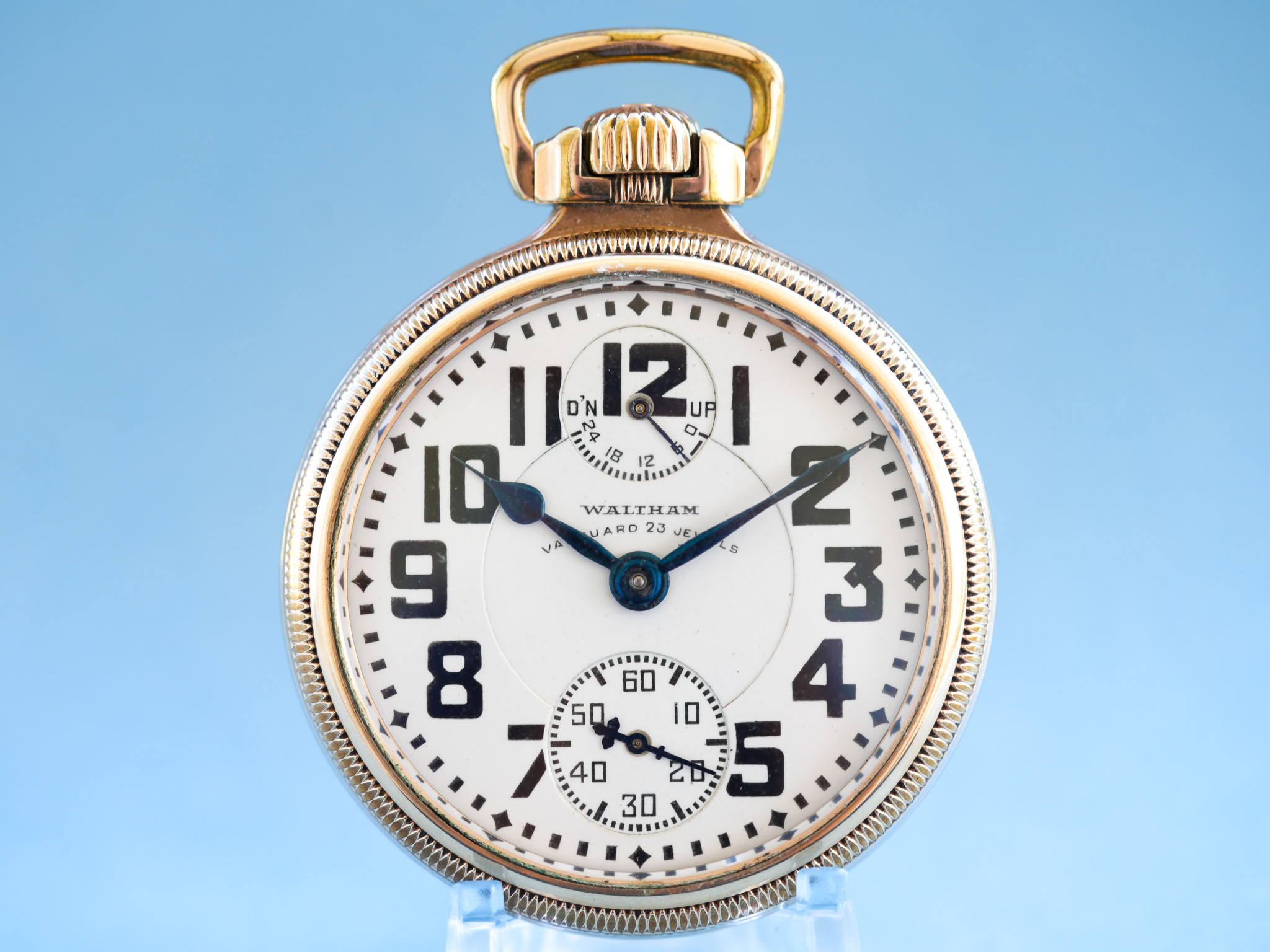
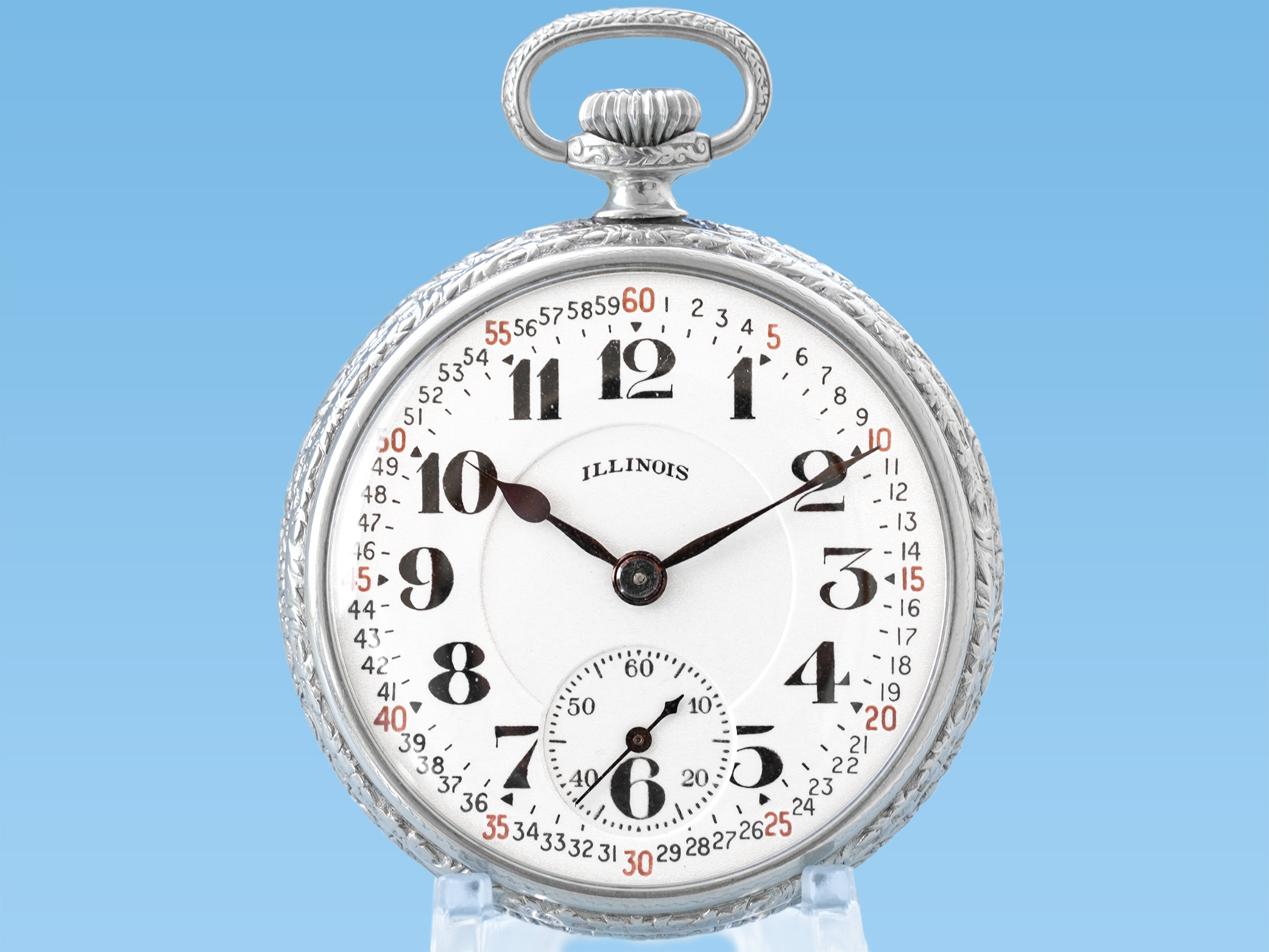
Illinois is my personal favorite of the American brands, and I'll tell you why up front: they were the last company standing that still cared. By the late 1920s, when Hamilton and Waltham were already shaving costs and cutting corners, Illinois was still putting out watches like the Bunn Special 60-hour, a movement that could run six hours longer than the railroad standard required, because why not. That's the kind of engineering pride that defines Illinois for me.
If you're new to Illinois, this is the guide I'd walk you through across the counter. Which grades matter, why the Bunn Special is the name to know, and what I currently have on the bench that I'd put into a new collector's hands.
The short history
The Illinois Watch Company was founded in 1869 in Springfield, Illinois, yes, the same Springfield that was Abraham Lincoln's hometown. Over about sixty years of production they made roughly five million pocket watches. They weren't the biggest American maker (that was Waltham), and they weren't the most commercially dominant in railroading (that was Hamilton), but in the years between 1900 and the Great Depression, Illinois made some of the most technically ambitious watches this country ever produced.
Hamilton bought Illinois in 1928, continued making Illinois-branded watches through 1932, and then effectively closed the Springfield factory. The final years of Illinois production, right before and after the Hamilton acquisition, are widely considered the peak, the 60-hour Bunn Specials in particular are the most collectible Illinois watches made. When a great American company is closing, they sometimes decide to go out with their finest work. Illinois did.
For collectors, Illinois occupies a specific sweet spot. They made roughly one-tenth of what Waltham made, which means surviving examples are scarcer than comparable Hamiltons and Walthams. But Illinois was not an obscure maker either. Their watches are well-documented and easy to authenticate. You can build a serious, deep Illinois collection without paying the kind of premiums that rarity normally commands.
The grades every Illinois collector should know
Bunn Special, the name that matters
The Bunn Special is the grade. If you're building an Illinois collection, this is the name you chase. 21 and 23 jewels, 16-size, adjusted to five or six positions and temperature. The Bunn Special was Illinois's railroad-grade flagship from the 1890s through the end of production.
The story goes deeper. "Bunn" is named after Jacob Bunn, one of the company's founders. By the 1920s the Bunn Special had evolved into what many collectors consider the finest railroad movement Illinois ever produced, and in the opinion of not a small number of serious collectors, one of the finest American railroad movements ever made, period.
What I love most is the 60-hour Bunn Special. Starting in the late 1920s Illinois began building movements with an enlarged mainspring barrel that let the watch run a full 60 hours on a single wind. The railroad standard required 48 hours. Illinois gave you 60. That's a twelve-hour cushion for free, and it's the kind of over-engineering that tells you what kind of company was making these.
I've got several Bunn Specials in the shop right now. The range is worth understanding:
- A Type III 60-hour Bunn Special in a 14k gold fill Bunn Special case, $2,475. The Type III is the latest evolution of the grade, as refined as the movement ever got.
- A 21-jewel Bunn Special with a Montgomery dial, $1,950. Montgomery dials are the ones with the full numeric minute track and large Arabic numerals. The Montgomery on a Bunn Special is a classic combination.
- A 21-jewel Bunn Special in a salesman display case, $2,450. The salesman display case has a crystal back, so you can actually watch the movement work. These are rare and specifically prized.
- A 23-jewel Bunn Special with a Ferguson railroad dial, $3,250. 23-jewel Bunn Specials are the top of the line, and the Ferguson dial is a less common and more desirable alternative to the Montgomery.
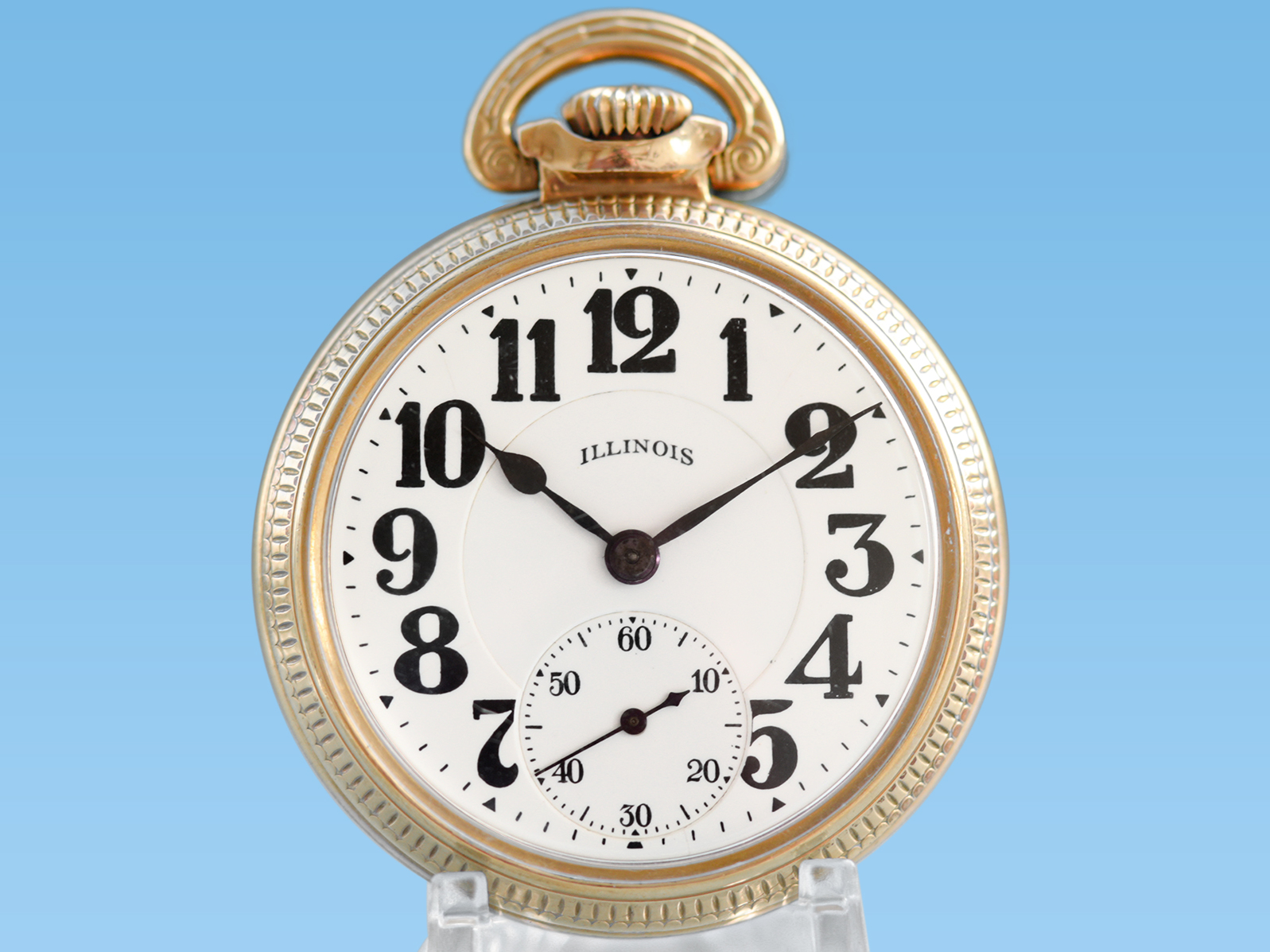
A specific note on which Bunn Special to buy first: if budget allows and you want the flagship, the 23-jewel with the Ferguson or Montgomery dial is the watch. If you're stretching a bit and want the best value, the 21-jewel 60-hour in a clean case is every bit the watch the 23-jewel is on the timegrapher, just one step down in collector prestige.
Sangamo, the premium dress line
Sangamo was Illinois's premium dress movement, named after the Sangamon River that runs through Springfield. 17 to 23 jewels, usually 12 or 16-size, often housed in solid gold cases. Not railroad grade but finished to a very high standard. The Sangamo Special was a 23-jewel variant specifically built for the collector market. Illinois making a statement that their finishing could match the finest Swiss dress movements of the era.
Santa Fe Special, the railroad specific
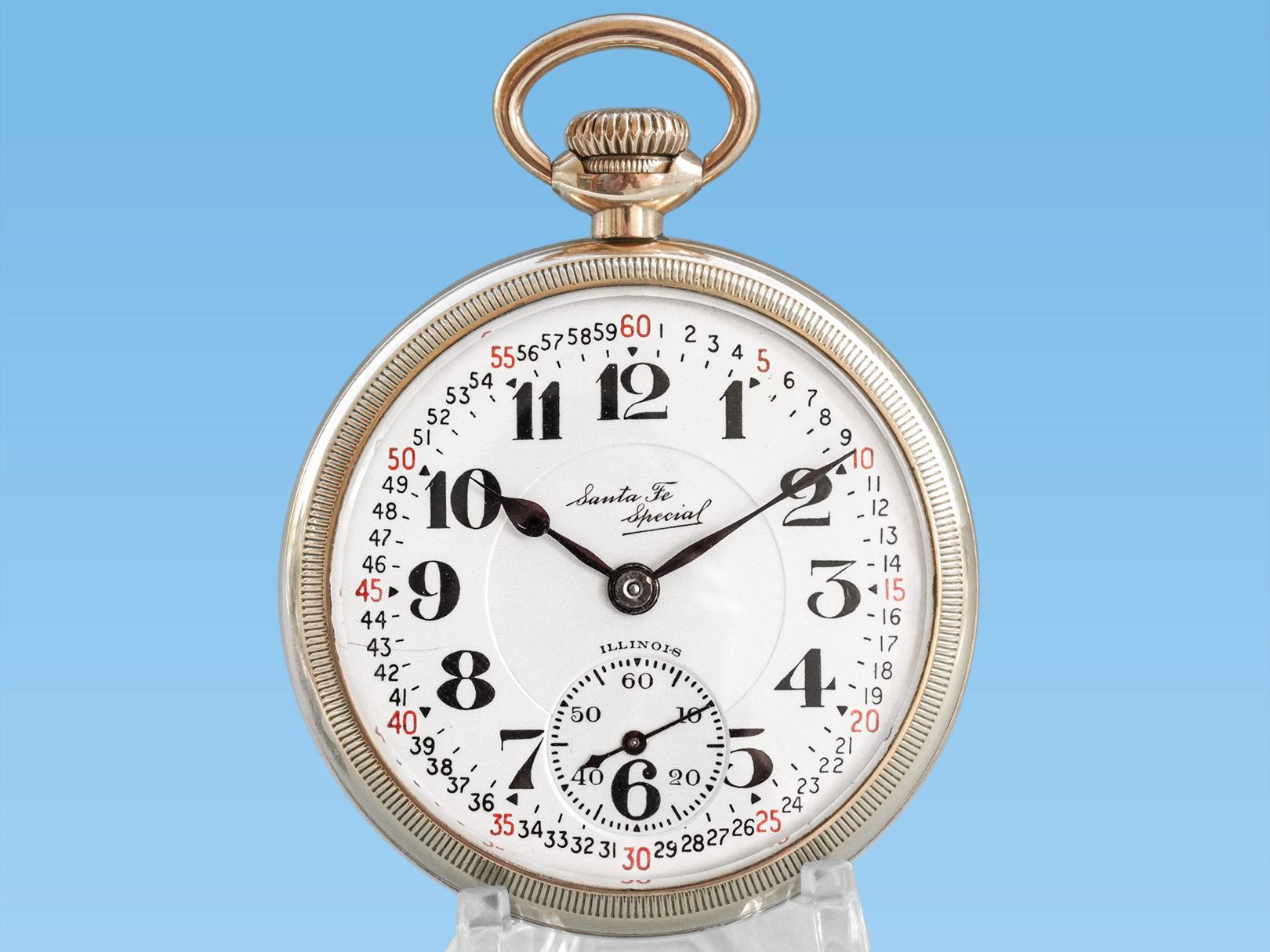
The Santa Fe Special was Illinois's railroad movement contracted specifically for the Santa Fe Railroad. 21 jewels, 16-size, adjusted to five positions. These are scarcer than Bunn Specials because they were built for a specific customer, and that railroad-specific branding makes them desirable to collectors who care about the actual railroad history behind their watches.
I have a Santa Fe Special in the shop right now, 21 jewels, Montgomery dial, $2,450. If you collect for railroad history specifically, that's a watch with a very specific story.
Grade 605 and other gentleman's grades
Not every Illinois you'll encounter is a railroad grade. Gentleman's dress watches like the Grade 605, 17 jewels, 12-size, often in solid gold or gold-fill cases, were what a well-dressed professional would have worn for Sunday service rather than a day on the rails. They're more affordable than the Bunn Specials, still exceptionally well-made, and often housed in beautiful period cases.
I have a Grade 605 in yellow gold fill right now, $1,475. If you want an Illinois in your collection but a Bunn Special is more than you want to spend on your first piece, a clean 605 is a great starting point.
How to read an Illinois
Start at the movement
Pop the back. The grade name on an Illinois is often written out in script on the movement, "Bunn Special," "Sangamo Special," "Santa Fe Special." Jewel count is stamped. Serial number is engraved. Check the Pocket Watch Database for the production year, the exact grade number, and the original jewel count. An Illinois movement that doesn't match its reported grade is a red flag. These are generally well-documented.
The 60-hour distinction
Look for "60 HOUR" stamped on the movement itself, usually on one of the bridge plates. A 60-hour Bunn Special is more valuable than a regular 48-hour Bunn Special, but the designation has to be real. Some sellers will claim 60-hour without the movement actually being one. Check the stamping before you pay the premium.
Dial options
Illinois shipped their Bunn Specials with a few distinctive dials. The Montgomery dial has the full minute track with large Arabic numerals, a railroad specification. The Ferguson railroad dial is a less common alternative, with a specific layout some collectors prefer. Original dials in good condition command significant premiums. A refinished Bunn Special dial hurts the watch more than refinished dials hurt some other brands, because Illinois dials are specific enough that collectors know when they're looking at a repaint.
Case appropriateness
The "Bunn Special" case, the 14k gold fill case stamped with the Bunn Special name, was specifically designed for Bunn Special movements and is the most period-correct choice. A Bunn Special movement in a generic salesman display case is still collectible, even more so, but a Bunn Special in a Bunn Special-branded case is the original factory pairing.
Illinois price guide, spring 2026
- Entry-level Illinois gentleman's grades (7–15 jewels): $200 to $500.
- Grade 605 and similar 17-jewel dress grades: $500 to $1,800 depending on case material.
- Sangamo dress grades: $900 to $2,500.
- Santa Fe Special and other railroad grades: $1,500 to $3,000.
- Bunn Special, 21 jewels, 48-hour: $1,500 to $2,500.
- Bunn Special, 21 jewels, 60-hour: $1,800 to $3,000.
- Bunn Special, 23 jewels: $2,500 to $4,500+, with exceptional examples higher.
- Sangamo Special, 23 jewels: $2,500 to $5,000+ depending on case.
Got an Illinois you might sell?
Illinois is a specific favorite of mine and I'm always buying. If it's a Bunn Special, Sangamo, or any railroad grade, I can give you a fair number the same day, usually within an hour of seeing the photos. Even gentleman's grade Illinois watches in good condition have a real market. Send me photos through the site or call me at (310) 486-0572. No obligation, no lowball.
Illinois needing service?
An Illinois movement that hasn't been serviced in a generation isn't broken, it needs cleaning, fresh oil, and proper timing. These were built to be serviced and they reward it. I service Illinois movements every week in the shop, and the 60-hour Bunn Specials in particular are some of my favorite watches to put on the bench. Send photos of what you've got or call (310) 486-0572 and we'll talk about what it needs.
Frequently asked questions
What makes the Bunn Special a 60-hour watch?
A larger mainspring barrel, plain and simple. The railroad standard required a watch to run 48 hours on a wind so a railroader could skip a day without stopping. Illinois engineers decided to go further, they redesigned the barrel to give a full 60 hours. The extra twelve hours sound small, but it's meaningful in two ways: it tells you Illinois was over-engineering for its own sake, and it gives the watch a practical margin most railroaders would have appreciated.
Are Illinois pocket watches rarer than Hamilton or Waltham?
Yes. Illinois produced roughly five million watches across their full production run. Waltham made forty million. Hamilton made tens of millions. That means surviving Illinois watches, especially in original, well-preserved condition, come to market less often than comparable Hamiltons and Walthams. For a serious collector that's a feature, not a bug.
What's the difference between a Bunn Special and a Sangamo Special?
The Bunn Special is a railroad-grade movement, built to the rigorous railroad timekeeping standard. The Sangamo Special is a dress-grade movement, often finished to an even higher cosmetic standard but not adjusted for the extreme conditions of railroad service. Think of it this way: a Bunn Special is an instrument built for a working railroader. A Sangamo Special is the watch that same railroader would have worn to his daughter's wedding.
Can I still use an Illinois as my daily carry?
A serviced Bunn Special will keep time better than a lot of modern mechanical watches. They were built to last and to be serviced. Carry it, wind it daily at the same time, and have it serviced every three to five years of regular use. An Illinois that's been on my bench and back out will run for decades more.
Which Illinois should I buy first?
My honest recommendation: a 21-jewel Bunn Special with a Montgomery dial. Real railroad-grade watch. Manageable price point compared to the 23-jewel flagships. A specific historical personality you can't replicate in any other American brand. And if you end up loving Illinois, which you probably will, it's a great foundation to build a collection on.
Happy collecting. Any questions about a specific Illinois, or one you're considering buying? (310) 486-0572. I'm happy to talk about Illinois with anyone who'll listen.