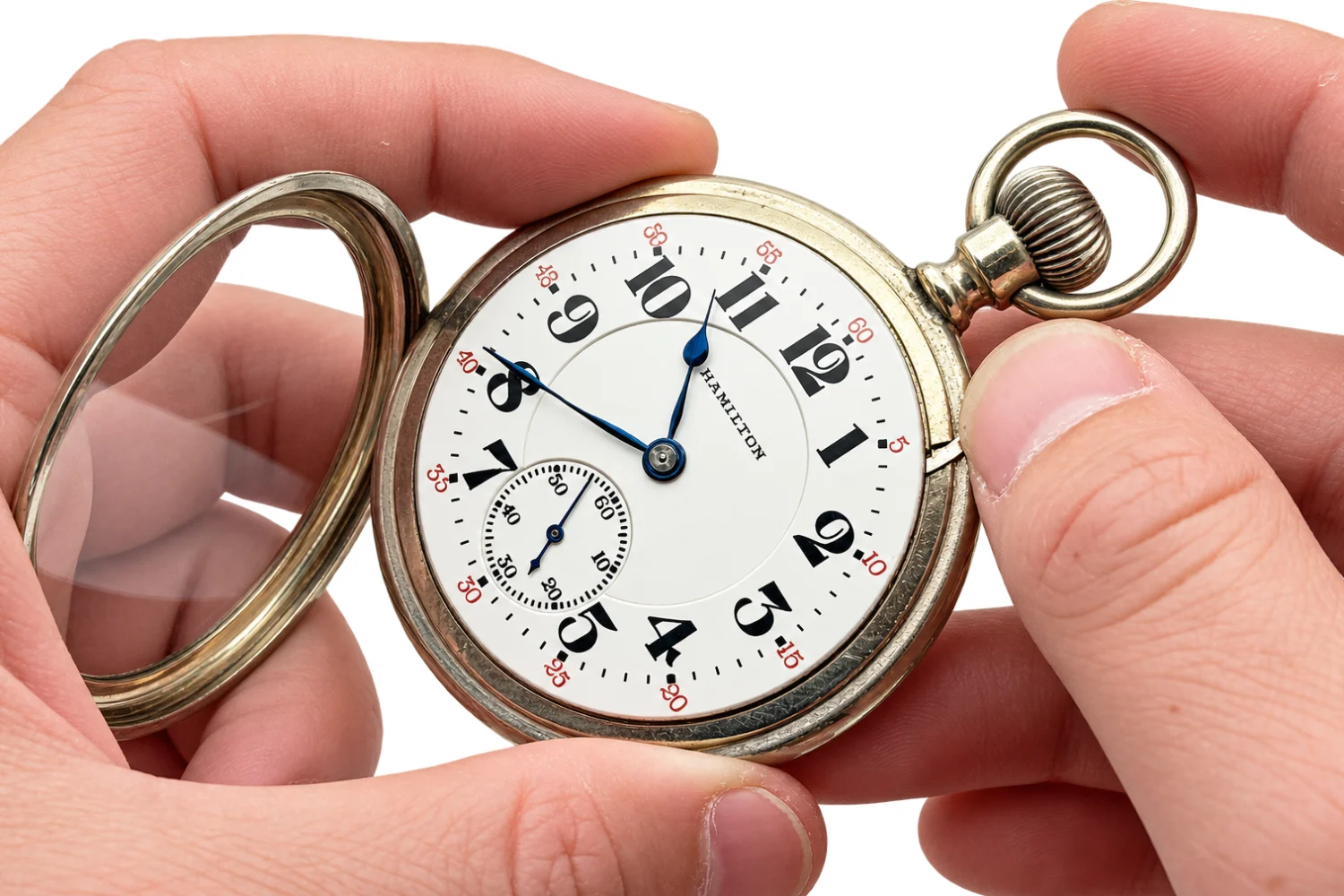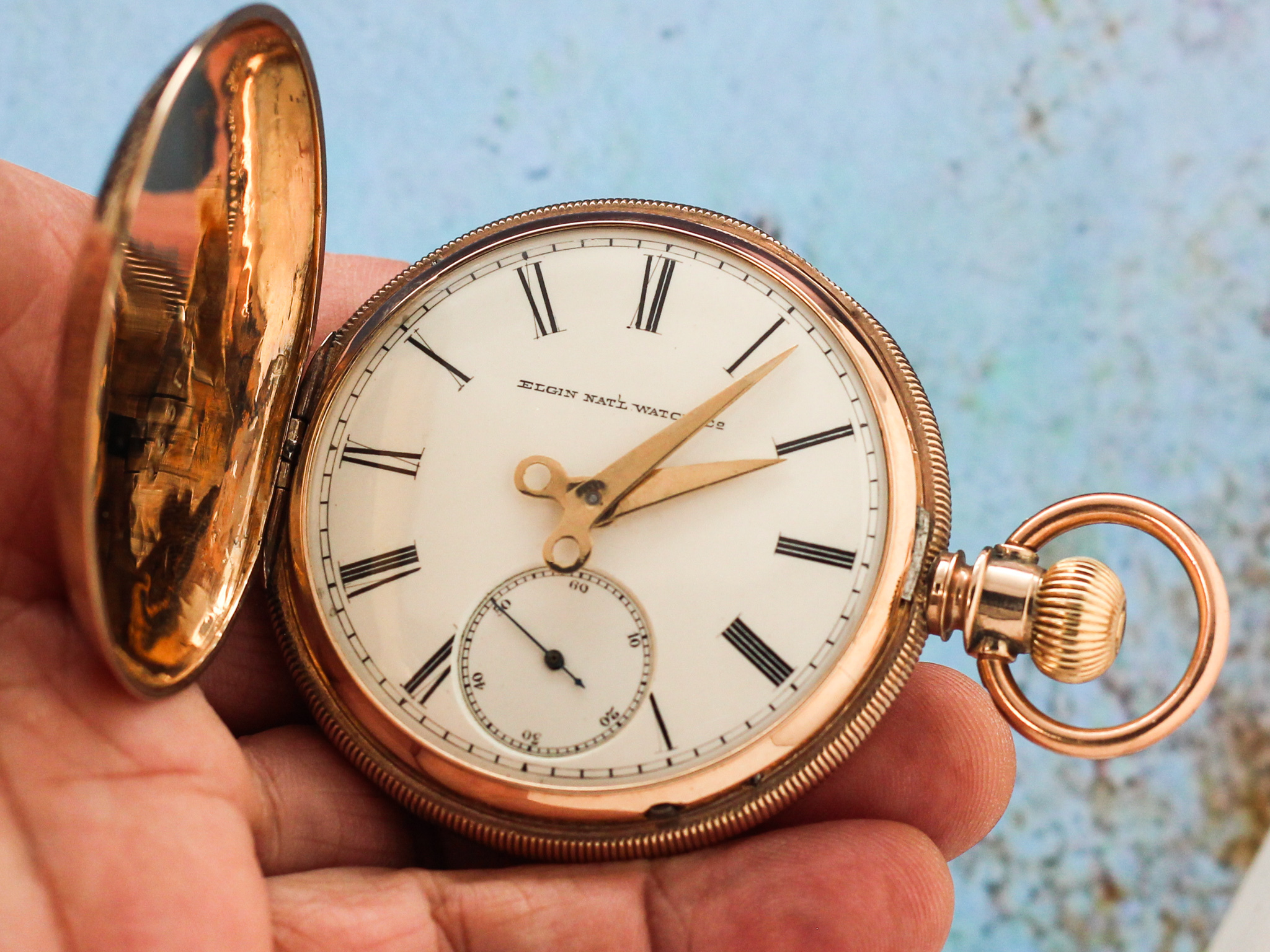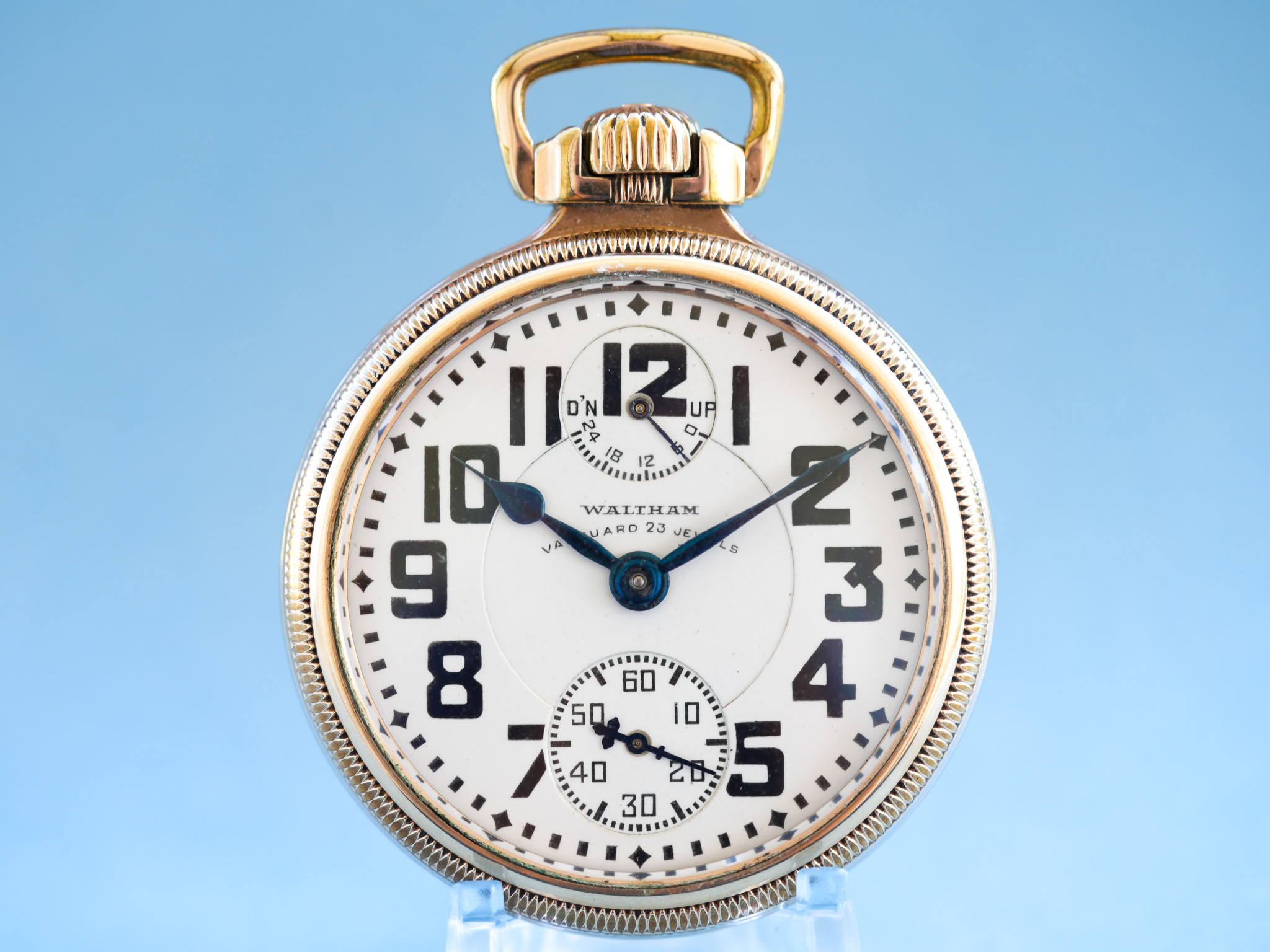
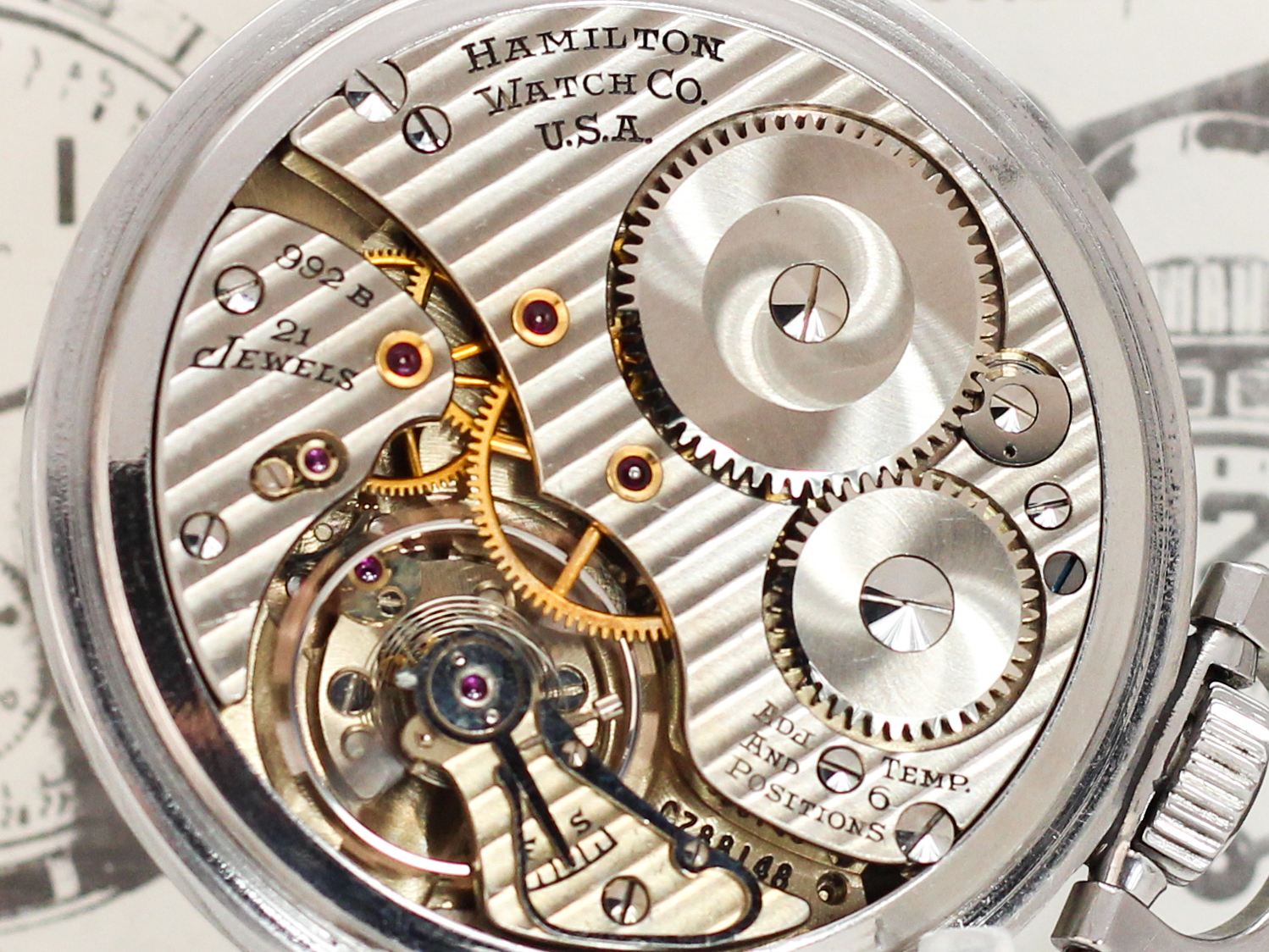
If you're circling a Hamilton 992B, you've got good taste and good timing. The 992B is the workhorse of Hamilton's railroad grades, the most produced and most collected of the great American railroad pocket watches. In thirty-plus years of buying and selling American pocket watches, I've had well over a hundred 992Bs come through my shop. Some have been nothing short of extraordinary. A few have been trouble. Let me tell you what I've learned.
Quick disclosure up front. I don't have a 992B in the case today. That happens. Clean 992Bs move fast, and when a good one lands, it sells within the week. What I do have is a gorgeous 992E, the 992B's direct successor, two different Hamilton 950s, and thirty years of 992B intel. Bookmark this page, check back weekly, and in the meantime, here is everything I'd want you to know before you buy your first (or fifth) 992B.
The 992B in Plain English
The Hamilton Grade 992B is a 21-jewel, 16-size, lever-set, open-face railroad movement produced by the Hamilton Watch Company from 1940 through 1969. It was Hamilton's answer to the question every American railroad man was asking after World War II: what do we use now that the 992 has been running beautifully for thirty years but technology has moved on?
The answer was the 992B. Same essential architecture as the 992. Same commitment to the General Railroad Timepiece Standards. But with one critical upgrade that made all the difference: the Elinvar hairspring. More on that in a minute.
The Basic Specs
- Jewels: 21, fully jeweled to the barrel
- Size: 16 (the railroad standard)
- Setting: Lever-set (pull the lever at 1 or 11 o'clock, not the crown)
- Case style: Open-face, never hunter
- Beat: 18,000 vibrations per hour (5 ticks per second)
- Adjustments: Temperature, isochronism, and six positions
- Dial: Enamel or silvered metal, bold Arabic numerals
- Production years: 1940 to 1969
- Serial range: Roughly C1 through C999999 and beyond (the 992B uses a letter-prefix serial format)
Why the 992B Matters: The Elinvar Hairspring Story
Here is the part that every serious 992B guide will tell you, but most will bury in the technical weeds. The Elinvar hairspring is not a marketing feature. It is the entire reason the 992B exists as a separate grade from the 992.
The original 992, produced from 1903 through 1940, used a steel hairspring with various compensation schemes to try to manage the way steel reacts to temperature. Steel springs get softer when they get warm and stiffer when they get cold. That plays havoc with timekeeping. The 992 managed this with a bimetallic balance wheel that changed shape with temperature to compensate. It worked, but it was a workaround.
Elinvar (the name is a contraction of "elasticity invariable") is a nickel-steel alloy developed by the Swiss physicist Charles-Edouard Guillaume, who won the 1920 Nobel Prize in Physics for his work on these alloys. An Elinvar hairspring barely changes elasticity across normal temperature ranges. That means the hairspring does the compensation work on its own, and you no longer need a bimetallic balance to rescue it.
When Hamilton dropped the 992 and introduced the 992B in 1940, the Elinvar hairspring was paired with a monometallic (solid) balance wheel. The result was a watch that kept better time across wider temperature swings, ran more consistently as it aged, and required less frequent regulation. This is not incremental. This is the single biggest leap in American railroad horology between 1910 and 1950.
Pick up a 992B, crack the back, and look at the balance wheel. If it's one smooth, polished solid ring of nickel alloy rather than the two-metal sandwich you'd see on a 992, you're looking at the whole reason the B exists.
The Cases You'll Encounter: Model 1 Through Model 17
Hamilton cased most of its own 992Bs, which is a small but meaningful difference from the earlier days when cases came from independent case makers like Keystone, Wadsworth, and Dueber. Hamilton identified their cases by model number, and over the 29-year production run of the 992B you will see something like seventeen distinct Hamilton case models plus a handful of odd variants.
The Gold-Filled Workhorses
The most common cases you'll see are 10k yellow gold-filled. Model 4, Model 10, Model 14, and the late Model 15 stainless are the four you'll encounter over and over. These were the standard-issue railroad cases, built for decades of pocket abuse, and the best of them still look sharp ninety years on. A gold-filled case with strong color, minimal brassing at the pendant and bow, and the original crown will often be the difference between a $900 watch and a $2,500 watch on otherwise identical movements.
The Stainless Steel Era
By the late 1940s and through the 1950s, Hamilton shifted many 992Bs into stainless steel cases (Model 15 being the most common). Railroad men loved these because stainless did not brass, did not wear through, and looked the same after twenty years of service as it did on day one. If you are buying a 992B intended for actual use, a stainless case is my recommendation every time.
Solid Gold and Rare Variants
Solid 14k gold 992B cases exist but are genuinely uncommon. Most often these were presentation pieces given at retirement or as long-service gifts. If you encounter one, expect to pay a significant premium over gold-filled, and expect the seller to have paperwork or at least an inscription backing up the provenance. I've handled only a handful of solid gold 992Bs in twenty years. They are worthy of your careful consideration when one appears.
There are also Model A, Model 11, and Model 17 variants that turn up less frequently, and each has its own fan base among collectors who specialize in Hamilton cases. None is more or less "correct." All are original to the 992B era.
Dials and Dial Variations
The 992B came with a double-sunk enamel dial through most of its production, later transitioning to silvered metal dials in the 1950s and 1960s. Both are beautiful when preserved, but the enamel dials are the more collectible of the two.
Montgomery Dial
Named for Henry S. Montgomery, the General Railroad Superintendent who pushed for bold numerals after the Kipton disaster, the Montgomery dial carries large Arabic numerals and a marginal minute track numbered 1 through 60 around the outside edge. This is the dial most collectors picture when they think "railroad pocket watch."
Boxcar Dial
The Boxcar dial uses similar bold numerals but slightly squared, with a more modern minute track. Some collectors prefer the Boxcar for its cleaner aesthetic. I'm partial to the Montgomery, but that's personal.
Canadian Market Dials
A handful of 992Bs were made for the Canadian market with slightly different dial printing. These turn up occasionally and command a small premium among collectors who specialize in regional variants.
Whatever dial you find, get under a loupe and check for repaints. A refinished dial on an otherwise clean 992B cuts value substantially. Genuine enamel dials have a specific depth and gloss that repaints cannot replicate. Hairlines around the winding arbor or a chip at the seconds bit are your honest condition indicators. A dial with one or two minor hairlines is usually correct.
992B vs 992: What Changed in 1940
I get asked this one weekly. Here's the short version.
- Hairspring: Steel to Elinvar
- Balance: Bimetallic to monometallic
- Mainspring: Carbon steel to Elinvar-compatible alloy in later runs
- Jewels: Both 21 jewels, no change
- Size: Both 16-size, no change
- Train: Solid gold center wheel on both (the center wheel on both grades is a beauty)
- Finish: Very similar damaskeening and plating. The 992B is often slightly brighter.
My take, for what it's worth: if you're buying for accuracy and long-term use, go 992B. If you're buying for collectibility and history, a clean pre-war 992 is the romantic choice. Plenty of collectors own both.
992B vs 992E: What Changed in 1931
The 992E came along after the 992 production, around 1931, and ran until the end of American pocket watch manufacturing in 1969. The E stands for Elinvar, Hamilton's upgraded hairspring alloy that improved on basic Elinvar with even better temperature and magnetic stability.
Total 992E production was only about 63,900 units, making it genuinely scarce compared to the 992B. I have one sitting in the case right now, in the popular Model 10 case, and holding it next to a 992B the difference is subtle but real. The movement finish on the 992E is a touch crisper. The running is slightly smoother. Is it worth the rarity premium over a 992B? For a collector building a full Hamilton railroad set, absolutely. For a first buyer, the 992B still delivers more watch per dollar.
992B vs 950: The Next Tier Up
The Grade 950 is Hamilton's pinnacle railroad movement, introduced in 1910 and produced in various sub-variants through the 1940s. Where the 992B was built as the workhorse, the 950 was built as the top-shelf offering. 23 jewels instead of 21. More elaborate movement finishing. Adjusted to six positions with even tighter tolerances.
I currently have two 950s on the bench. A stunning Grade 950 from 1935 in the popular Model 2 Bar Over Crown case, and a rare Keystone Nickeloid-cased 950. Both are worthy examples of what American watchmaking looked like when the railroads ran the country.
Here's my honest opinion. For most collectors, a clean 992B is the smarter buy. You get 90% of the watch for roughly half the money, and the accuracy in daily use is genuinely indistinguishable. The 950 is the grail piece, and it's earned that status, but the 992B is the watch I'd put in a new collector's hand.
What to Pay in 2026
Market prices move, but here is a framework that has held up well through the last several years in my shop. All figures assume running, serviced, original (or at least period-correct) examples.
Bargain Tier: $800 to $1,200
A 992B in this range will typically be a later-production example (1955 onward), in a common gold-filled or stainless case, with normal wear, a clean running movement, and a presentable but not pristine dial. Perfect starter watch. Run it weekly, service every five years, enjoy for a lifetime.
Collector Tier: $1,200 to $2,200
Now you're into strong examples. Early first-production 992Bs (1940 to 1943), crisper cases, better dials, often with original boxes or paperwork. Also in this range: the rarer case variants (Model A, stainless with original steel bow), and 992Bs with documented original purchase history.
Top-Shelf Tier: $2,200 and up
The finest 992Bs I've sold have been WWII-era U.S. Ordnance Department issued pieces with documented military provenance, solid gold presentation cases, and rare variants like the double time zone hand configuration. These are collector-grade, museum-ready examples, and the market knows it.
One note on pricing that nobody else will tell you. Auction and eBay comps can mislead. A 992B sold "as-is, not running" for $300 is not your benchmark for a clean, running, serviced example. Those are two different watches. When you're shopping, pay attention to whether the watch has been professionally serviced and is guaranteed running. That difference alone is worth $500 to $1,000 in value.
Red Flags to Watch For
I've seen every kind of problem a 992B can have, and here is what I check in this order when evaluating one to buy.
- Is it actually running? Wind it. Listen. A healthy 992B ticks with a confident, even cadence. Hesitation, weak starting, or stopping after a few seconds means there is a service needed at minimum, and possibly a broken part.
- Dial refinishing. Under a loupe, check numeral edges for fuzziness, check the Hamilton signature for correct font and spacing, and watch for paint sitting slightly proud of the enamel surface. A repainted dial is still a usable watch but worth substantially less.
- Case originality. Does the case model match the movement serial era? A 1941 992B should not be in a case that Hamilton did not make until 1955. Period catalog references resolve this in about three minutes with photos in hand.
- Mainspring health. A set mainspring will run weak on a full wind and lose power quickly. This is a straightforward repair but worth knowing before you buy.
- Service history. Ask. A 992B last oiled in 1975 is running on lubricants that are now closer to grit than oil. The watch may still tick, but it is actively wearing its own pivots every day. Walk away until service is done, or factor $490 for a full clean and oil.
Questions? Sell me one? I'm here.
If you've read this far, you're serious about 992Bs, and that makes you my kind of customer. If you've got a 992B sitting in a drawer and want to know what it's worth, send me a few photos and I'll give you a real number the same day. If you're looking for one to buy, check back here regularly or drop me a line and I'll put you on my list the next time a clean one comes through. And if you already own one and it needs work, that's what I do. Phone still works: (310) 486-0572.
Mini-FAQ
What is the difference between a Hamilton 992 and a 992B?
The core difference is the hairspring. The 992 used a steel hairspring paired with a bimetallic compensating balance. The 992B introduced the Elinvar hairspring paired with a solid monometallic balance. The Elinvar alloy has near-zero elasticity change across temperature, which gave the 992B better accuracy and long-term consistency. Production-wise, the 992 ran 1903 to 1940 and the 992B ran 1940 to 1969.
Are all Hamilton 992Bs railroad-grade?
Yes. Every 992B ever made met the General Railroad Timepiece Standards. 21 jewels, adjusted to temperature, isochronism, and six positions, lever-set, open-face, double-sunk dial with bold Arabic numerals. It was purpose-built as a railroad movement and never sold as anything else.
How much should I pay for a Hamilton 992B?
A serviced, running 992B in a presentable gold-filled or stainless case usually falls in the $800 to $2,500 range. Strong examples with original cases, clean dials, and documented provenance push into the $2,500 to $5,000 range. Rare variants (military-issued, double time zone, solid gold cases) can go considerably higher. Always confirm service status before paying for anything labeled "running."
What is the rarest 992B variant?
Several contenders. U.S. military-issued 992Bs from WWII with U.S. Ordnance Department markings are highly collectible. Double time zone 992Bs made for railroad dispatchers are genuinely rare. Solid 14k gold-cased 992Bs are uncommon as the great majority were gold-filled or stainless. Early first-production examples (serial numbers C1 through C10,000) are sought after by date-conscious collectors.
Is a Hamilton 992B accurate enough to use as a daily watch?
Absolutely, with the caveat that it needs to be properly serviced. A freshly cleaned and oiled 992B can easily hold to within 10 to 20 seconds per day, and a well-regulated one will run tighter than that. These were designed for railroad use where accuracy was a matter of life and death. They still perform. Just don't skip service.
Happy collecting.
The 992B is the American railroad watch I'd hand a new collector without hesitation. Reliable, beautifully made, historically significant, and still affordable enough that buying a clean one doesn't require a mortgage. Take your time, buy the best example you can afford, and don't forget that service is part of the deal. These were built to run for well over a century if you treat them right.
If any of this catches your eye, you know where to find me. Phone, email, or walk-in; all three work. That's the one I'd buy with my own money.